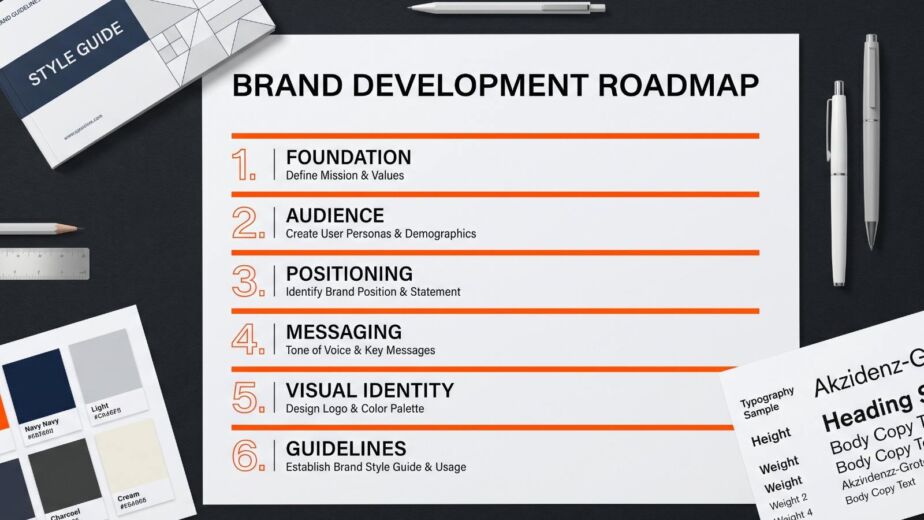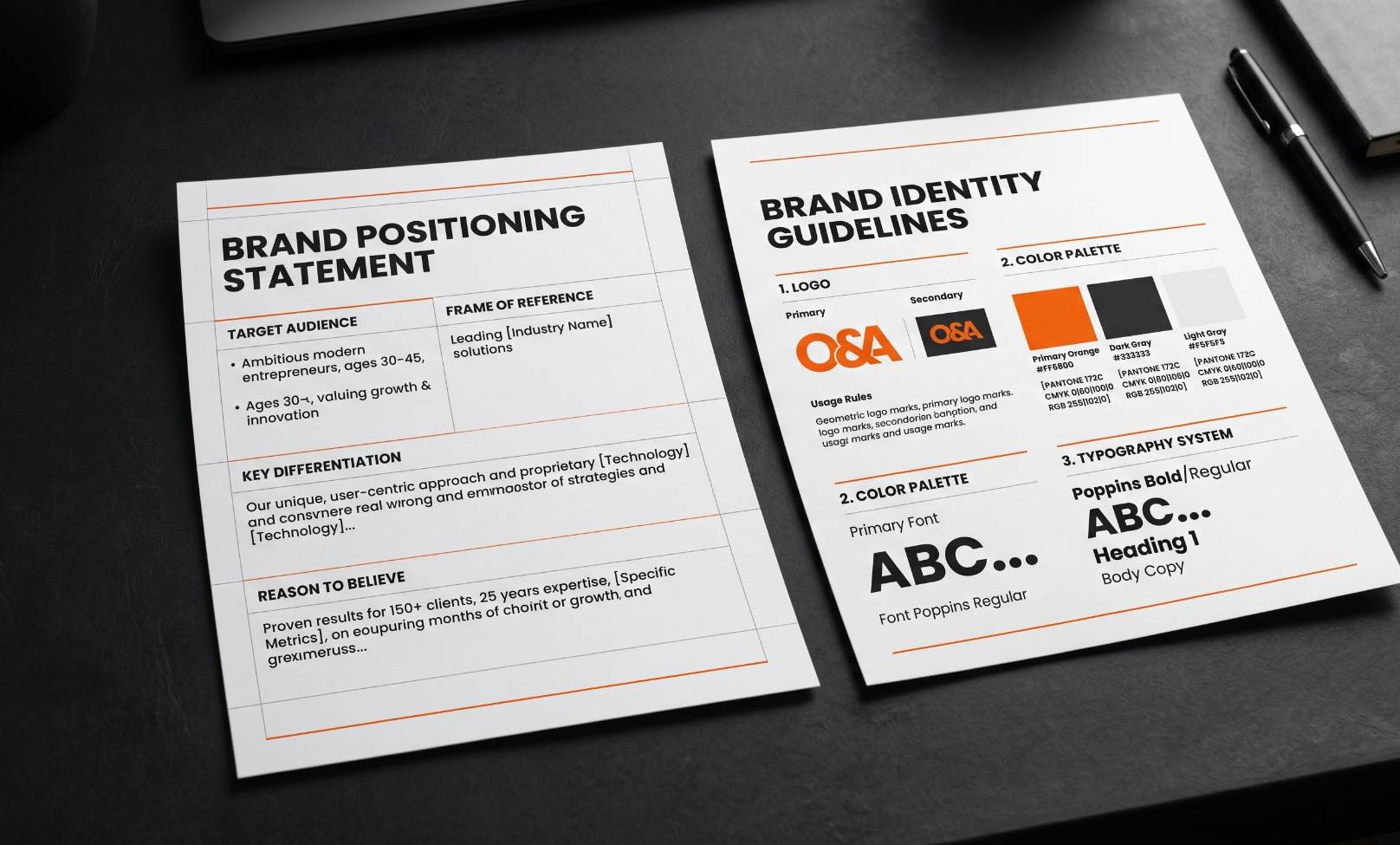
Branding is what your business is. Positioning is where it stands. Both are essential, both are strategic, and most businesses confuse them, underbuild them, or build them in the wrong order. Understanding the difference between the two is the starting point for building a brand that actually performs in the market.
The two concepts are closely related but they operate at different levels and answer different questions. Branding answers: who are we and how do we express that? Positioning answers: where do we stand in the market relative to every alternative our audience has? When both are built properly and built in the right sequence, they work together to make a business recognizable, memorable, and genuinely preferred. When either is missing or weak, the other cannot compensate.
This guide covers what each concept means, how they relate, and what building both properly actually requires. For businesses ready to act on this, our brand positioning services and brand identity services cover the full scope of this work from strategy through to final delivery.
What Is Branding?
Branding is the complete system through which a business expresses its identity. It includes the visual elements everyone thinks of first, like the logo, the color palette, and the typography, but it goes significantly deeper than that. Branding also includes the voice and tone a business uses to communicate, the values it stands for, the personality it projects, and the overall impression it creates at every point of contact with its audience.
A useful way to think about it: branding is everything that makes your business feel like itself. When a client reads your proposal, visits your website, receives an invoice, and then meets you in person, the consistency between all of those experiences is your brand. When those experiences feel coherent and intentional, the brand is working. When they feel scattered or disconnected, the brand is not.
Branding operates across several layers simultaneously:
- Visual identity: logo, color system, typography, photography style, graphic language, and how all of it is applied across every touchpoint
- Brand voice and tone: the consistent personality that comes through in every piece of written communication, from website headlines to email sign-offs
- Brand values and purpose: the principles that guide how the business operates and what it genuinely stands for beyond generating revenue
- Brand experience: the sum of every interaction a person has with the business, designed to create a consistent impression
- Brand equity: the accumulated recognition, trust, and perceived value built over time through consistent branding
Critically, branding is not the same as marketing. Marketing gets your brand in front of people. Branding determines what impression they form when it does. You can have excellent marketing and poor branding, which produces visibility without memorability. You can have excellent branding and poor marketing, which produces a strong identity that not enough people encounter. Both are needed, but branding comes first.
What Is Brand Positioning?
Brand positioning is the specific place your brand occupies in the mind of your target audience relative to every alternative available to them. It is the answer to one precise question: among all the options my ideal client has, why should they choose me, and what makes that choice obvious?
Positioning is not a tagline. It is not a mission statement. It is not a list of your features or benefits. It is a strategic declaration of the specific space your brand owns in the competitive landscape, defined by who it is for, what problem it solves better than anyone else, and why that claim is credible.
The concept was formalized by Al Ries and Jack Trout in their foundational work on the subject, which argued that positioning is not what you do to a product but what you do to the mind of a prospect. The goal is not to create something new but to occupy a specific mental space that is already there, waiting to be claimed. A brand that has not done positioning work is, by definition, occupying whatever mental space the market has assigned to it by default, which is rarely the most advantageous one.
Positioning is not about being the best. It is about being the most obvious choice for a specific audience in a specific situation. That specificity is what makes it powerful and what makes most businesses avoid doing it properly.
Branding vs Positioning: The Key Differences
How your business expresses itself
Branding covers your identity, voice, visual system, and values. It determines how your business looks, sounds, and feels across every touchpoint. Branding is the expression layer of your business, the outward form that your strategy takes.
Where your business stands in the market
Positioning defines your specific place in the competitive landscape relative to alternatives. It determines who you are most relevant to, what you are distinctly better at, and why that matters to the people you are trying to reach. Positioning is the strategic layer that branding expresses.
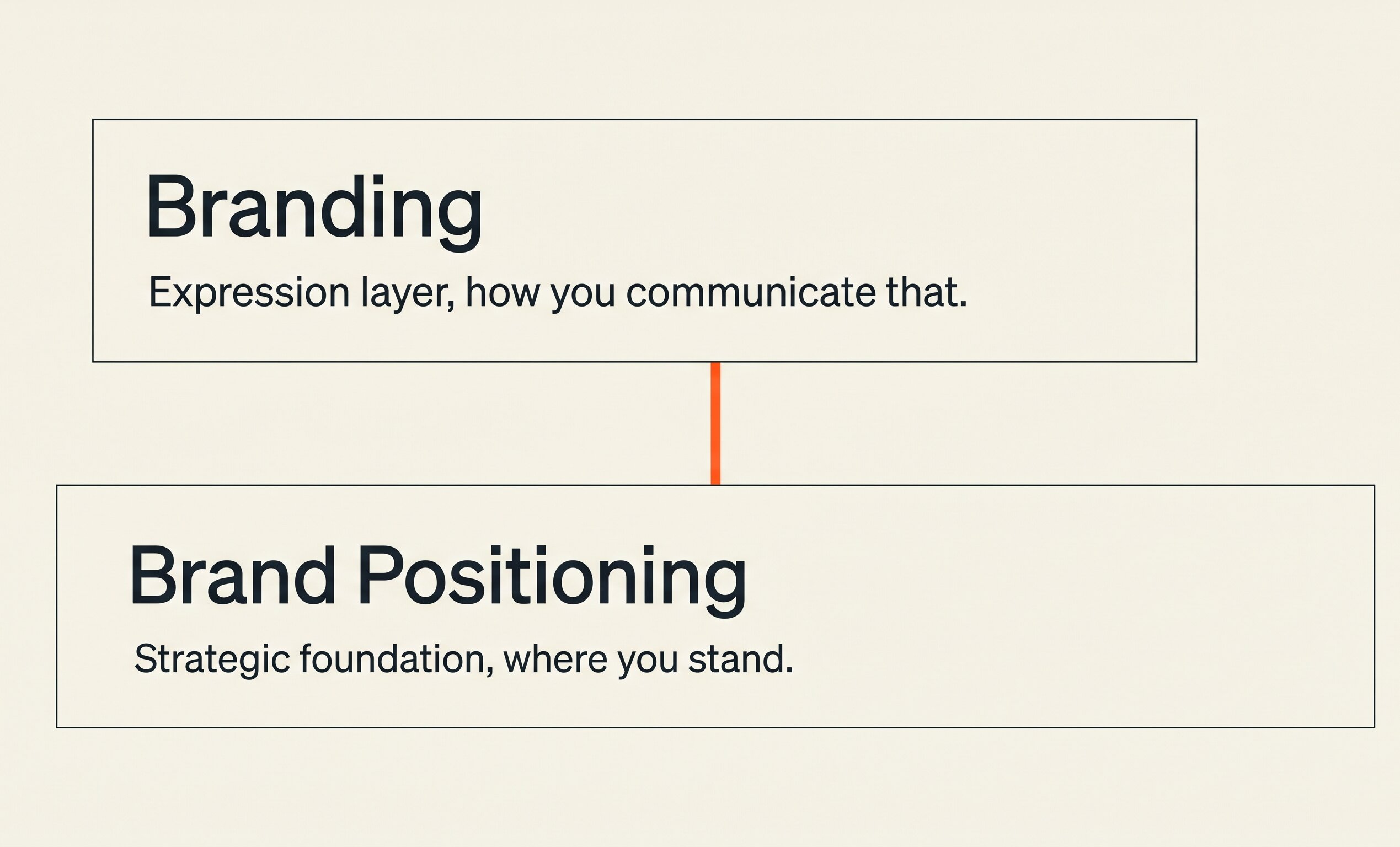
Positioning is the strategic foundation. Branding is what expresses that strategy visually and verbally.
| Branding | Positioning | |
|---|---|---|
| Primary question | Who are we and how do we express that? | Where do we stand relative to alternatives? |
| Key outputs | Visual identity, voice, guidelines, brand experience | Positioning statement, target audience, differentiation |
| Operates at | Expression level | Strategic level |
| Built by | Brand designers, creative directors, copywriters | Brand strategists, founders, positioning specialists |
| Measured by | Recognition, consistency, perceived quality | Clarity of differentiation, audience alignment, preference |
| Changes when | Brand evolves, market tastes shift, business grows | Business fundamentally changes what it offers or who it serves |
| Built in which order | Second | First |
How Branding and Positioning Work Together
Positioning and branding are not independent disciplines. They are two layers of the same system, and they are most powerful when each one informs the other in the right sequence.
Positioning comes first. Before any visual or verbal decisions are made, the brand needs a clear positioning statement that defines its audience, its differentiation, and its specific claim in the market. This positioning becomes the brief from which all branding decisions are made. Why this color palette? Because it communicates authority and clarity to this specific professional audience. Why this typographic system? Because it signals precision and expertise, which is exactly what differentiates this business in its category. Why this tone of voice? Because the positioning requires the brand to feel accessible but expert, which rules out both overly formal and overly casual registers.
When branding is built without a positioning foundation, the creative decisions become subjective. Designers and founders make choices based on aesthetics and personal preference rather than strategic intent. The result can look excellent but communicate nothing specific. A brand without positioning is a costume, not an identity.
Our brand strategy services are built on exactly this sequence: positioning and messaging first, then identity. It is not the fastest path to a finished logo, but it is the path that produces branding that actually performs commercially rather than just looking good in a portfolio.
Why Both Branding and Positioning Matter for Business Performance
Clear Positioning Makes Every Marketing Effort More Efficient
When your brand has a defined position in the market, every piece of marketing content has a clear direction. The messaging does not need to be invented from scratch each time because the positioning provides a fixed framework from which all communications are derived. Campaigns compound into accumulated recognition rather than each one starting from near-zero. The brand begins to do some of the selling before any specific campaign runs.
Without positioning, marketing is essentially explaining the business from scratch every time it reaches a new audience. Spending doubles to produce half the recognition.
Strong Branding Builds Trust Before the First Conversation
A prospect who encounters your brand before speaking to anyone in your business forms an impression in seconds. If your visual identity looks inconsistent, your messaging sounds generic, and your communications feel like they could belong to any business in your category, the impression formed is neutral at best. Neutral impressions do not convert.
A well-built brand creates a specific, positive impression before any conversation takes place. It communicates quality, authority, and relevance to the right audience. That pre-conversation impression is what shortens sales cycles, reduces price sensitivity, and makes referrals from existing clients more valuable.
Together They Create Compounding Brand Equity
Brand equity is the commercial value that accumulates when a brand is consistently recognized and positively associated with specific qualities by its target audience. It is built through the repeated intersection of clear positioning and consistent branding over time. Each time someone encounters the brand and forms the same correct impression, the equity grows.
Businesses with strong brand equity convert more efficiently, retain clients more easily, and can command premium pricing because the brand itself carries trust and recognition that competitors without that equity cannot match. This is why the investment in getting both positioning and branding right is not just a creative exercise. It is a commercial one.
The Most Common Mistakes Businesses Make With Branding and Positioning
Building a visual identity before doing positioning work. The logo gets designed, the website gets built, and the brand looks complete. But without positioning, the visuals have nothing specific to communicate. They look like something without saying anything. This is the most expensive sequence error in brand development.
- Positioning that is too broad. A positioning statement that could apply to any business in the category has no strategic value. The discomfort of committing to a specific, narrow position is the signal that it is actually working. Vagueness in positioning produces vagueness in everything built on top of it.
- Branding that is inconsistent across touchpoints. A strong visual identity applied inconsistently across a website, proposals, social media, and printed materials produces a fragmented brand experience. Inconsistency reads as disorganization and erodes the trust the brand is supposed to build.
- Treating rebranding as a visual project only. Businesses that rebrand without revisiting their positioning end up with new visuals layered over an unchanged strategic foundation. The brand looks different but communicates the same undifferentiated message. The commercial results are correspondingly limited.
- Separating positioning from brand messaging. Positioning defines where the brand stands. Brand messaging translates that position into the actual language used across every communication. Businesses that nail positioning but never translate it into documented messaging guidelines find that the brand sounds inconsistent as soon as more than one person is producing content for it. Our brand messaging services address exactly this gap.
Building Branding and Positioning: The Right Sequence
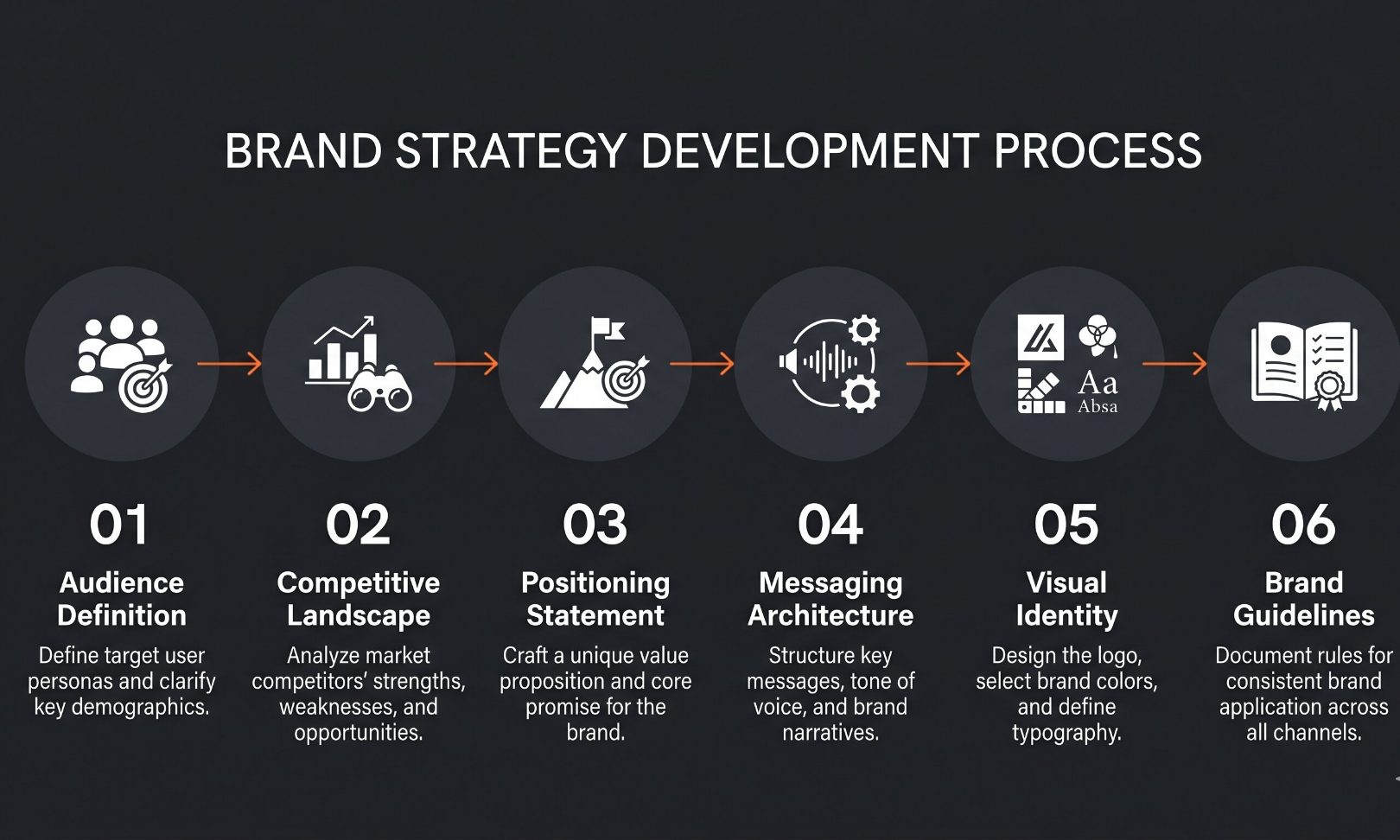
-
01
Define Your Target Audience Precisely
Positioning requires a specific audience to position against. The more precisely you can define who you are building for, including their specific problems, their current alternatives, and their buying behavior, the more specific and therefore powerful your positioning can be. Vague audience definitions produce vague positioning.
-
02
Map the Competitive Landscape
Positioning is always relative. You cannot know where to stand until you understand where everyone else stands. Competitive analysis at the positioning stage identifies which spaces are genuinely available, which are overcrowded, and which your business has the credibility and capability to own distinctly.
-
03
Write the Positioning Statement
A positioning statement is a single, clear articulation of who your brand serves, what problem it solves, how it solves it differently from alternatives, and why that claim is credible. It is an internal document, not a tagline. It becomes the brief from which every subsequent branding and messaging decision is made. This is the core output of proper brand positioning work.
-
04
Build the Messaging Architecture
With positioning defined, translate it into the language the brand uses consistently. This covers the core value proposition, supporting messages for different contexts and audience segments, and the brand voice guidelines that ensure every communication sounds like the same brand regardless of who creates it.
-
05
Design the Visual Identity
Only once the positioning and messaging are clear should visual identity work begin. The logo system, color palette, typography, and broader visual language are designed to express the positioning, not to look modern or on-trend. Every visual decision should be traceable back to a strategic reason rooted in the positioning statement.
-
06
Document Everything in Brand Guidelines
A positioning strategy and a visual identity without documented guidelines will drift immediately. Brand guidelines capture all decisions in a form that any team member, agency, or external partner can apply correctly. They are what turn a one-time creative project into a durable, scalable brand system.
Frequently Asked Questions
Branding is the complete system of how a business expresses its identity: visually, verbally, and experientially. It includes the logo, color system, typography, voice, tone, and the overall impression the business creates at every touchpoint.
Positioning is the strategic decision about where the brand stands in the competitive landscape relative to alternatives. It defines who the brand is most relevant for, what it does distinctly better than competitors, and why that claim is credible. Positioning is built first and becomes the foundation from which all branding decisions are made.
Clear positioning. Strong branding. Built in the right order.
We build the strategic foundation first, then the identity that expresses it. The result is a brand that looks right and performs commercially, not just one that looks good in a presentation.