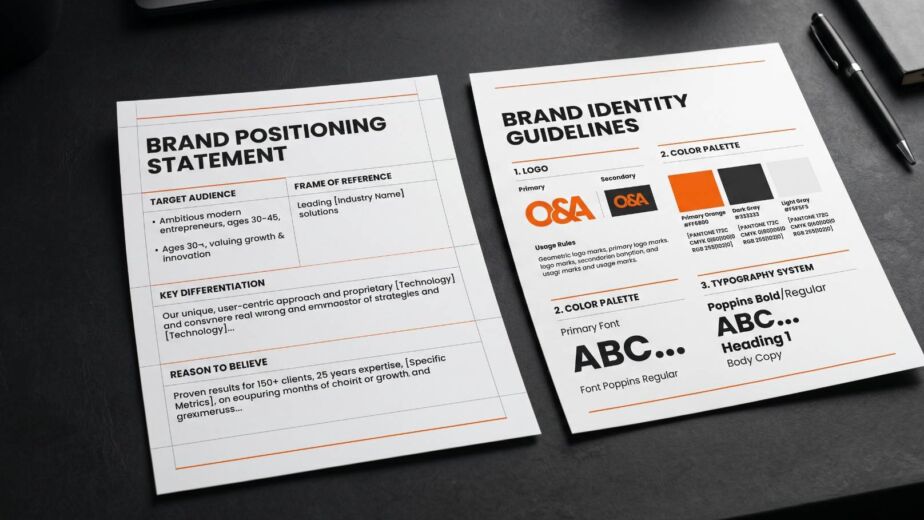
Most businesses spend money on marketing before they have answered the one question marketing depends on: why should this specific person choose us over everything else available to them? Brand positioning is the answer to that question. Without it, your marketing spends budget reaching people it will never convert, because there is nothing clear or compelling for them to latch onto.
What Is Brand Positioning in Marketing?
Brand positioning is the strategic process of defining the specific place your brand occupies in your target customer’s mind relative to all available alternatives. It is not a tagline, a logo, or a campaign. It is the foundational decision that determines what your brand stands for, who it is for, and why it deserves to be chosen.
In a marketing context, positioning does the work before marketing begins. It answers the questions that every ad, every email, every piece of content will rely on:
- Who is the exact customer we are talking to?
- What problem are we solving for them?
- What makes our solution meaningfully different from what already exists?
- Why should they believe us?
When brand positioning is clear, every marketing decision becomes easier and more consistent. Channel selection, messaging, tone, visual identity, pricing signals, all of these follow directly from a well-defined position.
Positioning is not what you say about your brand. It is what your target customer comes to believe about it, based on everything they see, hear, and experience.
Why Brand Positioning Matters in Marketing
Without positioning, marketing becomes a guessing game. You produce content without a clear perspective. You run ads that reach broad audiences who have no reason to care. You compete on price because nothing else distinguishes you. You attract some clients but not consistently the right ones.
With strong positioning, your marketing does something different. It speaks directly to a defined audience with a specific message that resonates with their actual situation. It makes your brand feel like the obvious choice for the people it is built for, and irrelevant to everyone else (which is fine, and actually useful).
This is the difference between a brand that generates word-of-mouth and one that has to keep buying attention.
The Four Core Elements of Brand Positioning
Every positioning framework, regardless of methodology, comes back to four things.
A precise description of the specific customer your brand is built for. Not a broad demographic. A real person with real problems and real alternatives already in front of them.
The market or problem space you compete in. Defining your category shapes how customers evaluate you and who they compare you against.
What makes your brand meaningfully different from every alternative. Not just different in your opinion, but different in a way that your target customer actually cares about.
The evidence that supports your differentiation claim. Case studies, credentials, process, results, client outcomes. Without proof, differentiation is just a claim.
The Positioning Statement: Putting It All Together
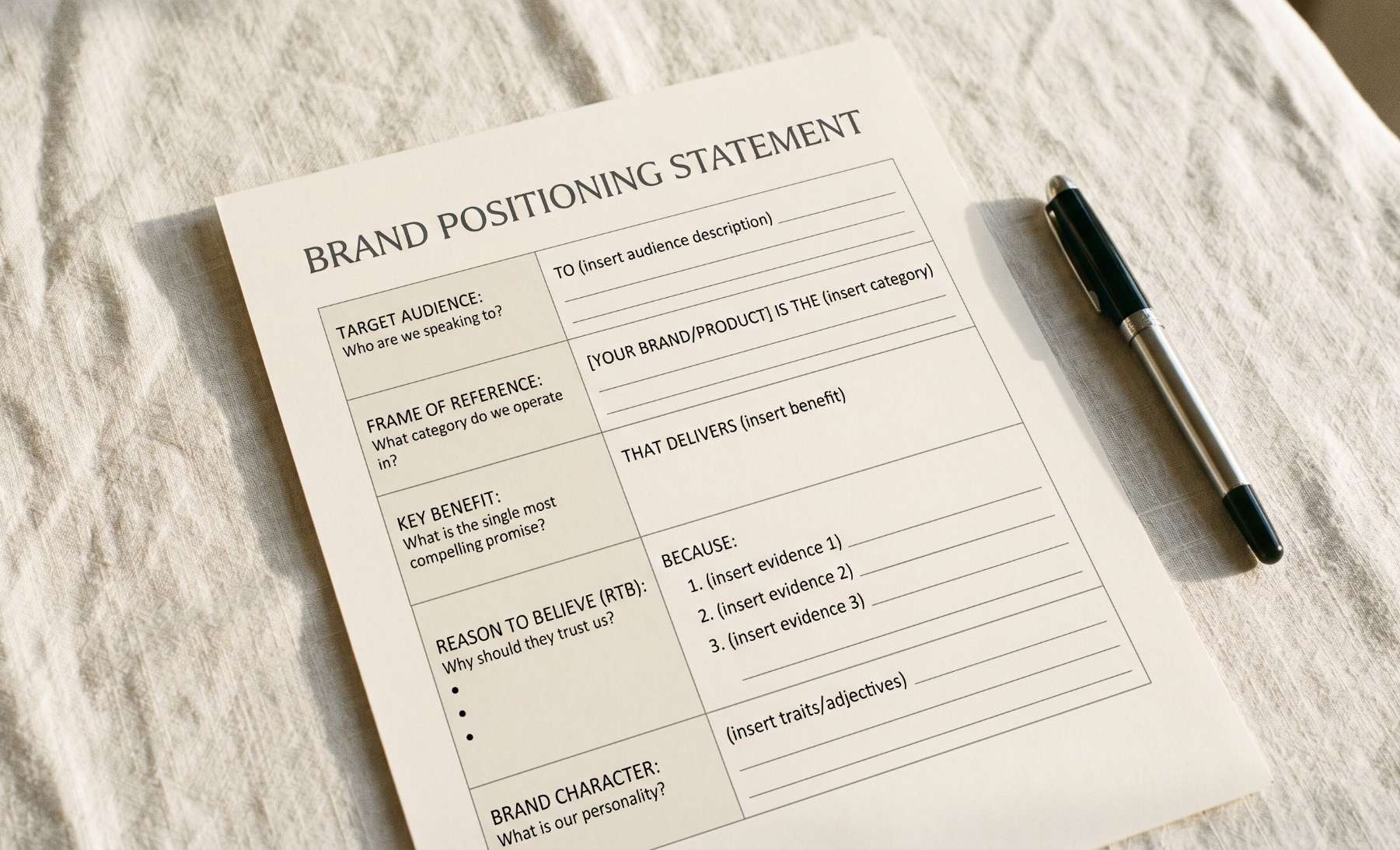
A positioning statement is an internal strategic document that brings all four elements into a single articulation. It is not a tagline and it is not meant to be used in public-facing marketing verbatim. Its purpose is to keep every person on your team aligned on what the brand stands for and who it serves.
A standard positioning statement follows this structure:
For [target audience], who [key need or problem], [brand name] is the [category] that [key differentiation], because [proof or reason to believe].
Once this statement exists and has been agreed on internally, it becomes the filter for every marketing decision. Does this campaign reflect our positioning? Does this messaging speak to our defined audience? Does this channel reach the people we are positioned for? If the answer is no, the decision does not move forward.

How Brand Positioning Shapes Your Marketing Strategy
Positioning is upstream of every marketing decision. Once it is defined, it informs the following directly.
Messaging and Copy
Your positioning defines the core message your brand needs to communicate. Every headline, every ad, every landing page should be an expression of that message adapted for the channel and the moment. Without positioning, copywriters default to generic industry language that could apply to any competitor.
Channel Selection
Knowing exactly who your audience is makes channel selection straightforward. You go where they actually are, not where everyone else in your category seems to be. A B2B brand positioned for early-stage founders has a different channel mix than one positioned for enterprise procurement teams, even if both call themselves B2B.
Visual Identity
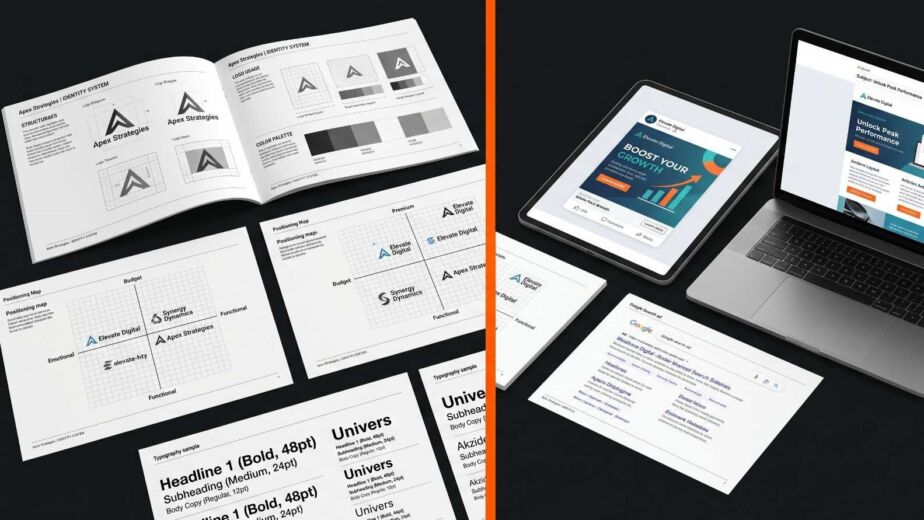
Your brand identity should be a visual expression of your positioning. The color palette, typography, imagery style, and overall aesthetic should all signal the right emotional territory to your target audience. A brand positioned as rigorous and authoritative should not look playful. A brand positioned as accessible and human should not look cold and institutional.
Pricing and Perceived Value
Positioning affects how customers perceive the value of what you offer before they even see a price. A brand positioned with clarity and specificity commands higher prices than a generic alternative, because customers understand what they are getting and why it is different. Competing on price is almost always a symptom of weak positioning.
Content and Thought Leadership
Your positioning defines the territory your brand should own in terms of ideas and expertise. A well-positioned brand does not publish content on every topic tangentially related to its industry. It publishes content that reinforces and extends its specific point of view, building authority in the exact area that matters to its target audience.
Common Brand Positioning Mistakes
| Mistake | What It Looks Like | The Real Problem |
|---|---|---|
| Positioning for everyone | “We serve businesses of all sizes across industries.” | No audience feels specifically spoken to. The brand attracts no one in particular. |
| Differentiating on hygiene factors | “We deliver quality work on time and on budget.” | Every competitor says the same thing. These are expectations, not differentiators. |
| Confusing positioning with a tagline | Writing a clever slogan and calling it positioning. | A tagline is an output of positioning, not the positioning itself. The strategy never gets done. |
| Positioning without audience research | Deciding internally what makes you different without validating with customers. | The differentiation may be real but irrelevant to the people being targeted. |
| Never revisiting positioning | Using the same positioning statement from five years ago. | The business has evolved but the brand still speaks to an older version of itself. |
When to Reposition Your Brand
Positioning is not permanent. A brand strategy that was correct when your business launched may no longer be accurate or effective after growth, a pivot, a new competitive threat, or a shift in your target market.
These are the clearest signals that repositioning is needed:
- You are consistently attracting the wrong type of client.
- Sales conversations rely too heavily on explanation that your brand should be doing for you.
- Your marketing generates traffic or leads but low conversion.
- Competitors have moved into the space you occupied and you have not adjusted.
- Your team describes the business in noticeably different ways to different people.
Repositioning does not always require a complete rebrand. Sometimes it is a strategic refresh: updating the messaging, sharpening the audience definition, or shifting the category framing. Other times the visual identity needs to follow. Either way, the positioning work happens first.
How to Develop Your Brand Positioning
- Audit your current position. Understand how you are currently perceived by existing customers, lost prospects, and the market at large. There is often a significant gap between how a business sees itself and how it is actually understood.
- Define your target customer precisely. Go beyond demographics. Understand their specific problem, what they have already tried, why those solutions fell short, and what they actually want from a provider like you.
- Map the competitive landscape. Identify every realistic alternative your target customer might consider. Understand where each is positioned and where the gaps are.
- Identify your genuine differentiation. What do you do, know, or deliver that is both meaningfully different and provably true? This has to be real. It cannot be invented during a branding exercise.
- Write the positioning statement. Bring audience, category, differentiation, and proof together in a single document your whole team can align on.
- Translate positioning into brand expression. Update your messaging, visual identity, and content strategy to reflect the position you have defined.
Frequently Asked Questions
Brand positioning in marketing is the strategic process of defining the specific place your brand occupies in your target customer’s mind relative to competitors. It determines who you serve, what you offer, how you differ, and why that difference matters. Every marketing decision, from messaging to channel selection, flows from this foundation.
The core elements are: target audience (a precise description of who you serve), category (the market or problem space you compete in), differentiation (what makes you meaningfully different from alternatives), and proof (the evidence that supports your claim). A positioning statement brings all four together in a single articulation.
A brand positioning statement is an internal document that defines your target audience, the category you compete in, your key point of difference, and the reason to believe it. It is not a tagline or a public-facing message. It is a strategic reference point that keeps every marketing decision aligned.
A value proposition is a customer-facing statement of the benefit you deliver. Brand positioning is the broader strategic framework it lives inside. Positioning defines the full competitive context: who you serve, what category you compete in, how you differ, and why that matters. The value proposition is one output of your positioning work.
Brand positioning should be reviewed any time the business grows significantly, enters a new market, changes its offering, or starts attracting the wrong customers. It is not a one-time exercise. A positioning that was accurate three years ago may no longer reflect where the business is or where it needs to go.
Yes. Smaller businesses often benefit more from clear positioning than larger ones because they have fewer resources to waste on broad, unfocused marketing. A precisely positioned small business can dominate a specific niche and build strong word-of-mouth where a larger, generic competitor cannot compete.
Not Sure Where Your Brand Stands in the Market?
We help growing businesses define a position worth owning and build the identity to back it up.
Let’s Talk Positioning