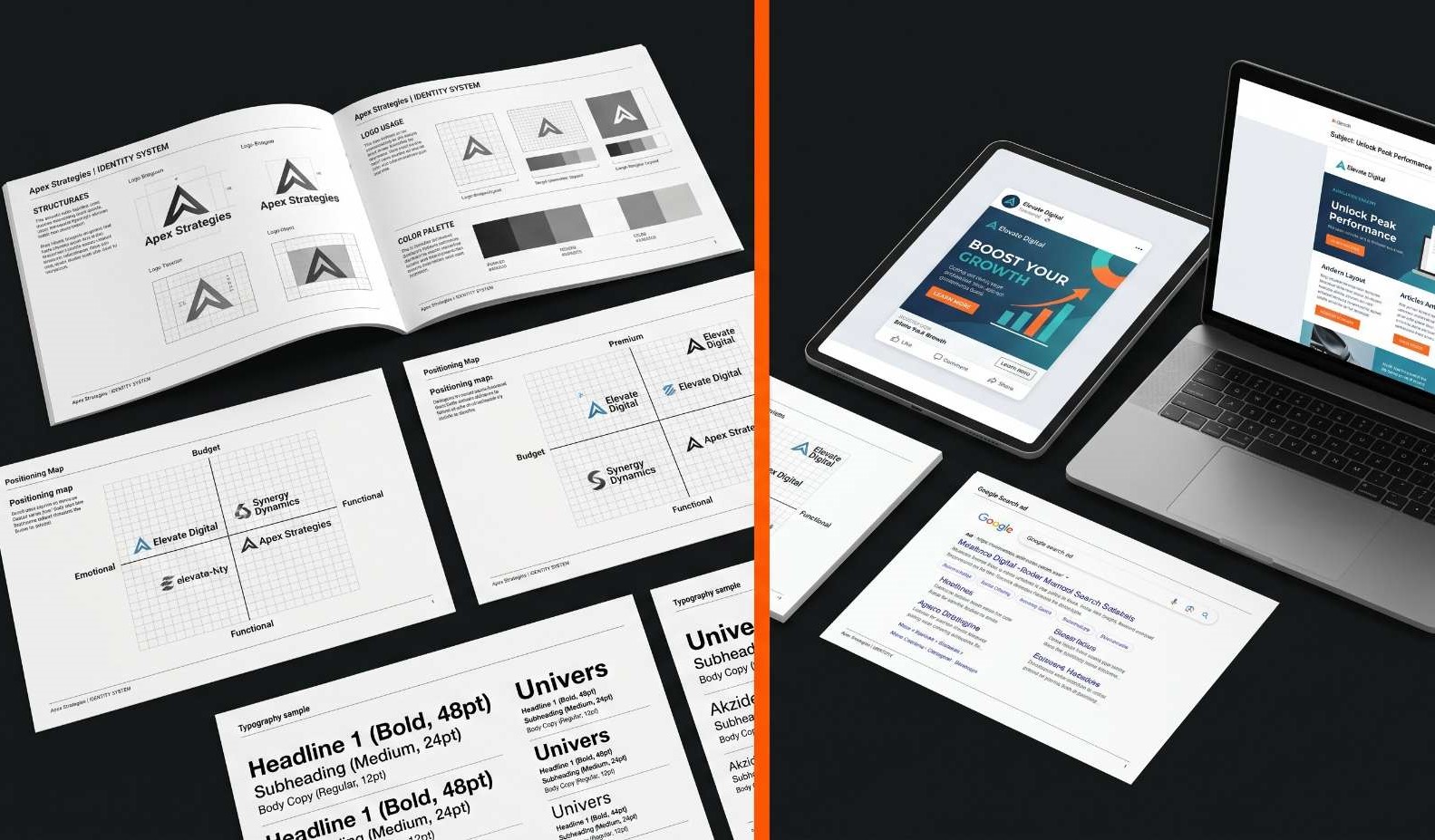
Brand strategy and marketing strategy are not the same thing, and treating them as interchangeable is one of the most expensive mistakes a growing business can make. Brand strategy defines who you are. Marketing strategy defines how you get in front of people. Both matter. But they operate at different levels, serve different purposes, and need to be built in a specific order.
Most businesses invest in marketing before their brand is ready. They run ads, post on social media, and build campaigns on a foundation that was never properly defined. The result is high spend and low retention, because nothing they put out sticks. People see the campaign but do not remember the brand.
This guide breaks down what each strategy actually covers, how they relate to each other, and how to know which one your business needs to focus on right now. If you want to go deeper on the strategic side, our brand strategy services are built around exactly this kind of clarity work.
The Core Difference in One Sentence
Brand strategy is the foundation. Marketing strategy is what you build on top of it.
Brand strategy answers: Who are we, why do we exist, and why should anyone care? Marketing strategy answers: How do we reach the right people and get them to act?
Without brand strategy, your marketing has no consistent voice, no clear positioning, and no reason to be remembered. Without marketing strategy, your brand exists in isolation with no way to grow an audience. The two strategies are interdependent, but they are not the same discipline, and they should not be built at the same time.
What Is Brand Strategy?
Brand strategy is the long-term plan that defines what your business stands for and how it wants to be perceived by the people it serves. It is not about logos or colors. Those are outputs of brand strategy, not the strategy itself.
A strong brand strategy covers your positioning in the market (how you are different from alternatives), your core audience (who specifically you are built for), your brand voice and personality (how your business sounds in every piece of communication), your value proposition (the specific benefit only you provide), and your visual identity system (the visual language that makes you recognizable and consistent).
Brand strategy also sets the boundaries for what your business will and will not do. It keeps your communications coherent across years, across team members, and across channels. When your brand strategy is clear, every new piece of content, every new campaign, and every new hire has a framework to align with. That is what makes brands feel coherent rather than scattered.
Our work in brand positioning is specifically focused on this layer, defining where a business sits in its market and making that position clear enough to build everything else on top of it.
What Brand Strategy Covers
- Brand purpose and mission
- Target audience definition and audience personas
- Competitive positioning and differentiation
- Brand voice, tone, and personality
- Messaging hierarchy and key messages
- Visual identity system (logo, color, typography, design system)
- Brand guidelines for consistency across all touchpoints
What Is Marketing Strategy?
Marketing strategy is the plan for how your business reaches, attracts, and converts customers using specific channels, tactics, and campaigns. It sits above individual tactics like a single social post or a Google ad, but below the foundational level of brand strategy.
A marketing strategy covers which channels to use (paid search, email, social, content, events), how to allocate budget across those channels, what type of content to create, how to measure performance, and what specific actions you want your audience to take. Marketing strategy is inherently shorter term than brand strategy. It should be reviewed and adjusted regularly based on data, channel performance, and business objectives.
Marketing strategy is also where execution lives. It is where you decide to run a campaign targeting a particular segment of your audience, test a new format, or increase spend on a channel that is outperforming. It is operational and adaptable by design.
What Marketing Strategy Covers
- Channel selection (paid, organic, owned, earned)
- Campaign planning and creative briefs
- Content strategy and editorial calendar
- Budget allocation and media planning
- Audience targeting and segmentation
- Conversion goals and performance KPIs
- Testing, measurement, and iteration cycles
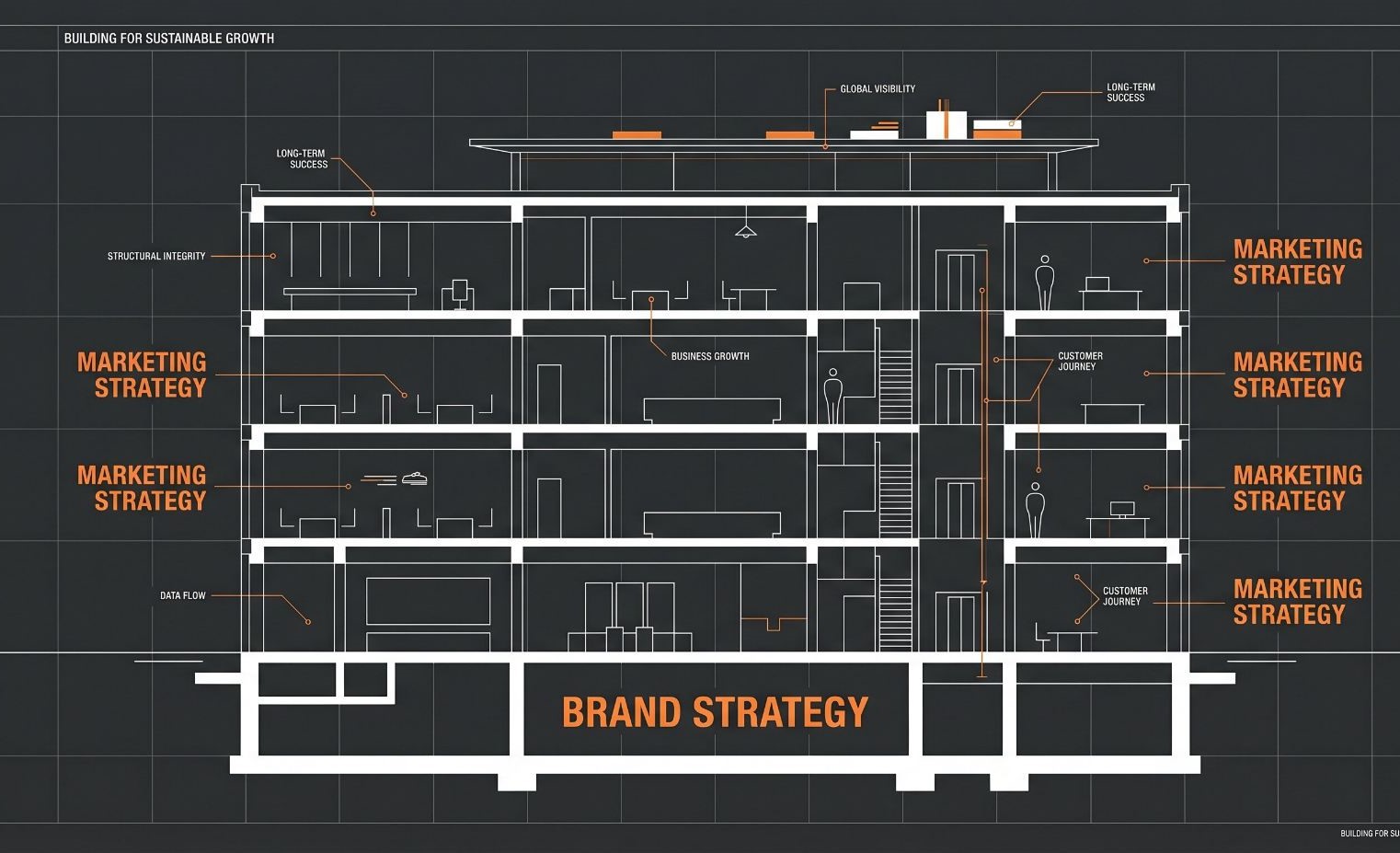
Brand strategy is the structural foundation. Marketing strategy is built on top of it.
Brand Strategy vs Marketing Strategy: A Direct Comparison
| Brand Strategy | Marketing Strategy | |
|---|---|---|
| Purpose | Define who you are and how you are perceived | Reach and convert the right audience |
| Time horizon | Long-term, relatively stable | Short to medium-term, regularly revised |
| Primary question | Who are we and why should anyone care? | How do we grow our audience and generate revenue? |
| Key outputs | Positioning, identity system, brand guidelines | Campaigns, content calendars, channel plans |
| Who owns it | Founders, brand strategists, identity designers | Marketing teams, growth teams, media buyers |
| Measured by | Brand recognition, consistency, perceived value | Impressions, leads, conversions, revenue |
| Changes when | Business fundamentally pivots or outgrows itself | Campaigns end, channels shift, goals change |
Which Comes First?
Brand strategy always comes first. This is not a matter of preference. It is a matter of sequence.
Your marketing strategy needs to know who it is speaking to, what it is saying, and what makes the business worth choosing. All of that comes from brand strategy. If you build a marketing plan without a defined brand, you end up with inconsistent messaging, unclear targeting, and creative that does not compound into recognition over time.
Think of it this way. A brand strategy is the brief that every marketing campaign is written from. If the brief does not exist or is vague, the campaigns that come out of it will be scattered. You can run a good individual ad on a weak brand, but you cannot build a strong company that way. Every campaign essentially starts from zero rather than building on what came before.
Marketing amplifies what already exists. If your brand is unclear, marketing will amplify the confusion, not the clarity.
What Happens When You Get the Order Wrong
The most common version of this mistake is a business that rushes to launch marketing campaigns before defining its brand. The symptoms are recognizable: ad spend that produces inconsistent results, social media content that performs well in isolation but does not build an audience, sales calls where prospects struggle to articulate why they chose the company, and a general feeling that the business is working hard to stay visible rather than being genuinely remembered.
The second version is a business that invested in brand identity (a logo, a color palette, a website) but skipped the strategy layer underneath it. The visuals exist, but there is no positioning, no consistent voice, and no clear differentiation. Marketing built on top of this looks polished but does not convert, because the visual layer never had a strategic foundation to give it meaning.
Both situations usually require a proper brand identity and strategy reset before marketing can do its job properly.
How Brand Strategy and Marketing Strategy Work Together
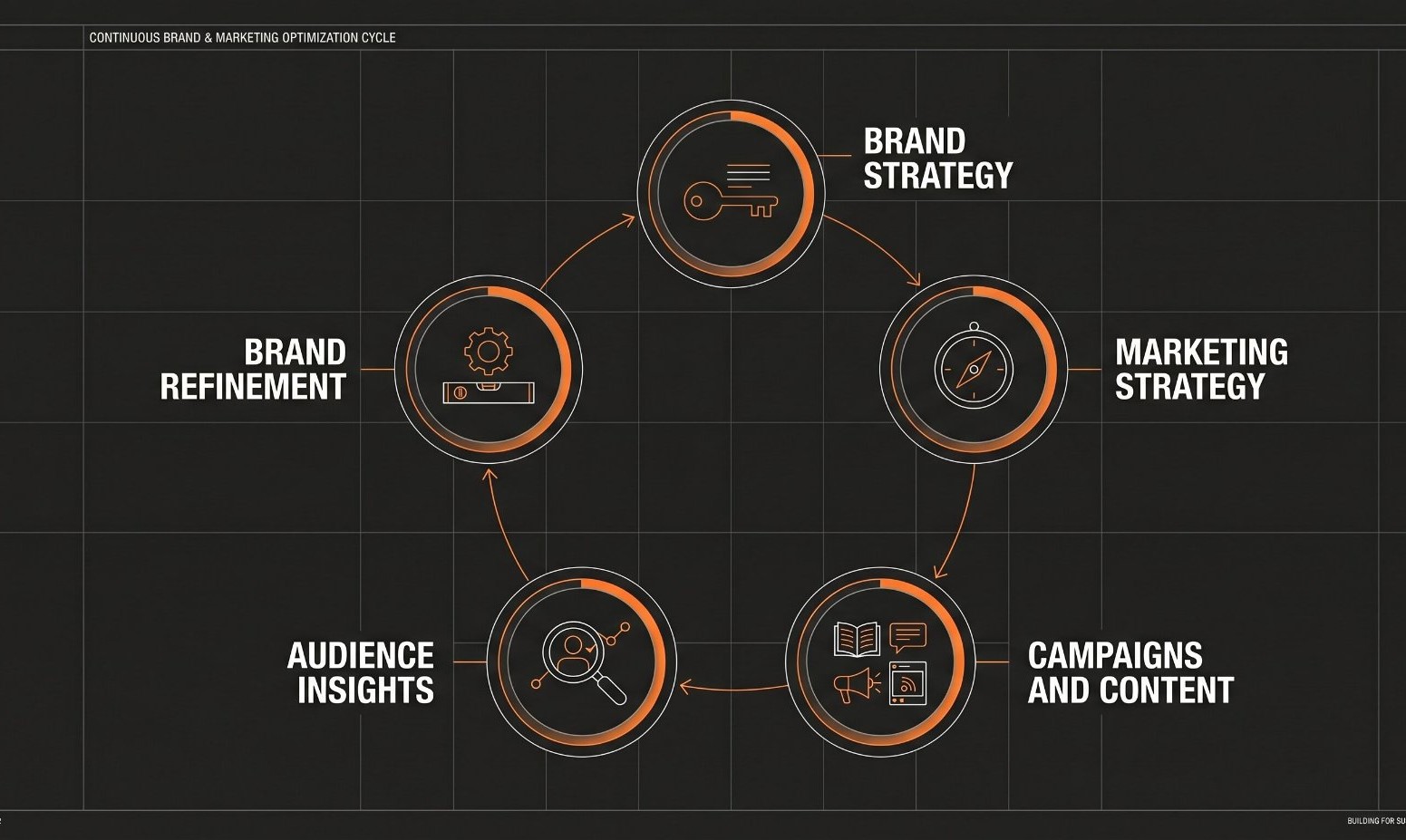
When both strategies are properly built and aligned, they operate as a system. Brand strategy provides the fixed reference point. Every marketing decision gets checked against it. The campaign creative reflects the brand voice. The targeting reflects the defined audience. The messaging reinforces the positioning rather than contradicting it.
Marketing, in turn, surfaces real-world feedback that can inform how the brand evolves. Which messages resonate most. Which audience segments respond most strongly. Which visual treatments perform best in context. This feedback does not change the brand strategy, but it sharpens how the brand expresses itself over time.
The result is brand equity that compounds. Each campaign adds to the recognition built by the last one. The audience begins to associate specific visual cues, messages, and values with the business. Over time, that recognition reduces the cost and effort required to convert new customers, because the brand is doing some of that work before any campaign even runs.
-
01
Define your brand strategy first
Positioning, audience, voice, differentiation, and visual identity system. This is the fixed reference point everything else gets built from.
-
02
Build your marketing strategy on top of it
Channel selection, budget allocation, campaign planning, and KPIs. All of it informed by and aligned to the brand strategy beneath it.
-
03
Run campaigns and measure performance
Execute, test, and iterate. Marketing strategy is designed to be adjusted. Brand strategy is designed to be stable.
-
04
Feed insights back into brand refinement
Market feedback, audience response, and performance data can sharpen how the brand expresses itself over time without destabilizing its core.
Signs Your Business Needs to Fix Its Brand Strategy Before Marketing More
Not every business is ready to scale its marketing. If several of the following describe your situation, the priority should be brand strategy, not more campaigns.
Your brand strategy needs work if:
- Your team describes the business differently to different people
- Your visuals look different across platforms and materials
- You struggle to explain why a client should choose you over a competitor
- You have gone through multiple logo or visual refreshes but nothing feels right
- New campaigns require you to build messaging from scratch each time
- Clients remember your work but not your brand name
Your marketing strategy needs work if:
- Your brand is clear but you are not reaching enough people
- You have no consistent presence on the channels your audience uses
- You rely entirely on referrals with no repeatable growth engine
- Your content calendar does not connect to specific business objectives
- You are spending on ads without a defined conversion framework
- You cannot attribute revenue to any specific marketing effort
If you recognize the signs in the brand column, the right investment is a structured brand strategy engagement before any marketing budget is scaled. Businesses that have gone through a rebranding process that properly addresses the strategy layer consistently find that their marketing becomes more efficient afterward, because the brand does some of the selling before the campaign even starts.
A Note on Brand Marketing
You will sometimes encounter the term “brand marketing,” which sits at the intersection of both disciplines. Brand marketing refers to marketing activity that is specifically designed to build brand recognition and emotional association rather than drive immediate conversions. Think of long-running campaigns that reinforce a brand’s identity over time, sponsorships, content series, or community building.
Brand marketing is only effective when the underlying brand strategy is solid. You cannot build recognition for something that is not clearly defined. Brand marketing is the practice of making the brand visible and memorable. Brand strategy is what determines what that brand actually stands for.
Frequently Asked Questions
Technically yes, but it costs more in the long run. Marketing without brand strategy produces results that do not compound. Each campaign starts from near-zero recognition rather than building on what came before. Smaller businesses often feel they cannot afford brand strategy, but the reality is that running marketing without it is far more expensive over time because nothing accumulates into lasting equity.
Even a basic brand strategy (clear positioning, defined audience, consistent voice, simple visual system) dramatically improves what every marketing effort produces.
Ready to build a brand that makes your marketing actually work?
We help growing businesses build the strategic foundation first, so every campaign, every piece of content, and every customer interaction builds on something solid.