The next era of branding will not be decided by who has the biggest budget or the most sophisticated tools. It will be decided by who has the clearest position. As artificial intelligence collapses the cost of visual production, as markets fragment into smaller and more specific communities, and as audiences grow more skeptical of every claim a brand makes, the only sustainable advantage left is knowing exactly who you are for, what you stand for, and how to prove it.
That is not a comforting prediction for businesses that have relied on good aesthetics, a generous ad budget, or sheer market presence to hold their position. It is, however, a significant opportunity for every growing business that is willing to do the strategic work that larger and more established competitors have consistently avoided.
This is not a trend report. There is no shortage of those. This is an argument about what will actually matter, and what most businesses will get wrong as they try to respond to a rapidly changing environment.
The Shift That Changes Everything
For most of branding history, the execution layer was expensive and scarce. Hiring a designer, producing quality photography, developing a coherent visual system, building a website that looked credible: all of these required significant investment, and that investment was itself a signal of seriousness. A polished brand communicated resources, and resources communicated trust.
AI has broken that signal. The cost of producing passable visual work has collapsed. A logo, a website, a set of brand assets, a library of marketing images: all of these can now be produced quickly and cheaply by anyone with access to the right tools. The execution layer is no longer scarce. It is abundant.
When execution becomes abundant, it stops being a differentiator. The market fills with competent-looking brands that have nothing meaningful to say. And that is precisely where the opportunity opens up for businesses that lead with strategy rather than aesthetics.
Specificity Is the Only Moat Left
The brands that will build durable market positions over the next decade share one characteristic: they are for someone specific. Not for everyone who might theoretically benefit from what they offer. For a defined audience with a defined problem, addressed with a message that could not have been written for any other business in the same way.
This is the direction that brand strategy has been pointing toward for years. But the pressure to be specific is about to increase dramatically. Here is why.
As AI-generated content floods every channel, the signal-to-noise ratio for generic brands will approach zero. A business that speaks to everyone will be indistinguishable from the noise. A business that speaks precisely to a specific person about a specific problem they recognise immediately will cut through that noise without effort.
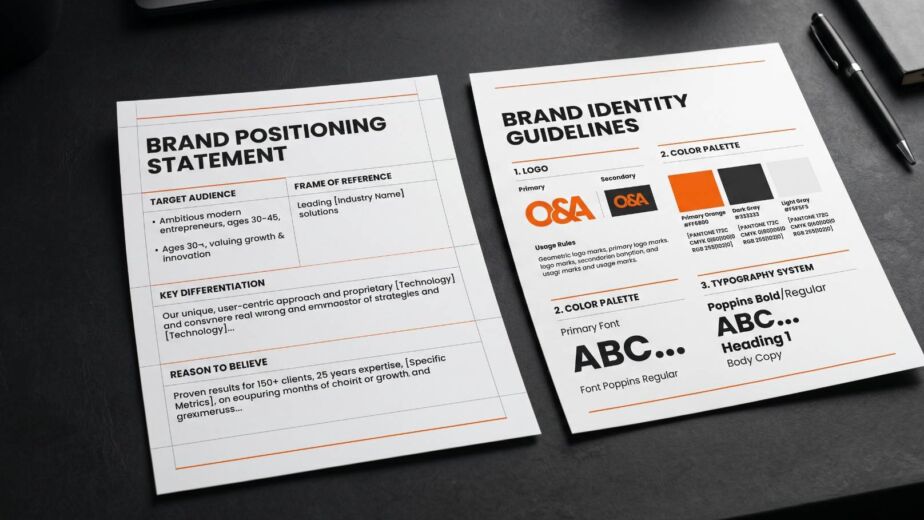
Specificity is not just a messaging choice. It is a structural decision about who the business is built to serve. That decision belongs in the positioning work that precedes every design and communication decision. The businesses doing that work now, while competitors are still chasing aesthetic trends, will own clear positions that are significantly harder to displace later.
The future belongs to brands that are willing to be irrelevant to most people in order to be indispensable to the right ones.
Three Forces Reshaping Branding in the Next Decade
Specificity is the thesis. These are the three forces driving it.
AI Commoditises Execution
Design tools, copy generators, and image production platforms are making execution faster and cheaper for everyone. The gap between a professionally produced brand and an AI-assisted one is closing rapidly. Strategy, positioning, and genuine differentiation are the only things AI cannot produce because they require honest, specific knowledge of who you are and who you serve.
Trust Is in Structural Decline
Audiences are more skeptical than they have ever been. Claims without evidence are dismissed. Testimonials without context are ignored. The brands that will earn trust in this environment are those that demonstrate rather than claim, that show outcomes rather than assert them, and that build a track record visible enough to be verified independently before a buying decision is made.
Discovery Is Fragmenting
People find brands through more channels than ever before, and the channels themselves are changing faster than any brand strategy can respond to individually. The brands that win will not be those that chase every new platform. They will be those with a consistent identity and message strong enough to work across any surface it appears on, because the foundation is clear regardless of the format.
The Trust Deficit and What It Demands from Brands
Trust in institutions, media, and advertising has been declining for over a decade. The effect on brand communication is significant and still accelerating. Generic claims, “industry-leading,” “world-class,” “trusted by thousands,” have been devalued to the point of meaninglessness. Audiences have developed a refined ability to tune them out.
What replaces claimed authority is demonstrated proof. The brands that are building genuine trust right now share a set of behaviours: they show their work in specific detail, they name outcomes rather than attributes, they let clients speak in their own words about concrete results, and they are consistent enough that a prospect encountering them for the fifth time recognises something familiar and specific rather than something vague and forgettable.
This is not primarily a content strategy challenge. It is a brand identity and positioning challenge. A brand with clear positioning knows what proof points matter most to its specific audience. A brand with a coherent identity has a consistent enough presence that repeated exposure compounds into recognition. The content is the expression. The strategy is what makes it trustworthy.
What Proof-Based Branding Looks Like in Practice
Proof-based branding is not about producing more case studies. It is about making the specific and verifiable the primary language of the brand, rather than a supporting footnote. This means the following in practical terms.
- Outcomes replace attributes in all primary messaging. Not “we deliver high-quality brand work” but “the brands we build attract higher-value clients at a shorter sales cycle.”
- Specificity replaces generality in audience targeting. Not “businesses of all sizes” but a named type of business with a named problem.
- Client language replaces brand language wherever possible. The words clients use to describe their experience are almost always more credible and resonant than anything the brand writes about itself.
- Portfolio depth replaces portfolio breadth. Fewer examples shown in greater detail, with real context about the brief, the thinking, and the outcome, build more trust than a grid of logos with no story behind them.
Branding in the Age of AI Discovery
Search behaviour is changing in ways that have direct consequences for how brands need to present themselves. AI-powered search tools are beginning to surface answers directly rather than simply listing pages. This changes what it means to be found.
In a traditional search environment, visibility depended on ranking. In an AI-mediated discovery environment, visibility depends on being the clearest, most specific, and most consistently articulated answer to a particular question. A brand with sharp positioning and a coherent message across every page and platform is far more likely to be surfaced as a relevant answer than one that spreads a vague message broadly.
This makes brand messaging a more technical and more strategic concern than it has ever been before. The language a brand uses to describe itself, its audience, its differentiation, and its outcomes needs to be precise, consistent, and genuinely reflective of what the business actually does at its best. That kind of messaging does not emerge from a copywriting exercise. It comes from the positioning work that precedes it.
What This Means for Businesses Considering a Rebrand
The pressure to respond to a changing market often leads to rebranding conversations. A new logo. A refreshed website. Updated brand colours. These are legitimate tools but they are frequently applied to solve problems they cannot solve.
A business that is attracting the wrong clients will not attract the right ones with a new visual identity if the underlying positioning has not been resolved. A business whose messaging feels generic will not become specific by improving its typography. The aesthetic layer of a brand is an expression of the strategic layer. Changing the expression without changing the strategy produces a brand that looks different but means the same nothing it meant before.
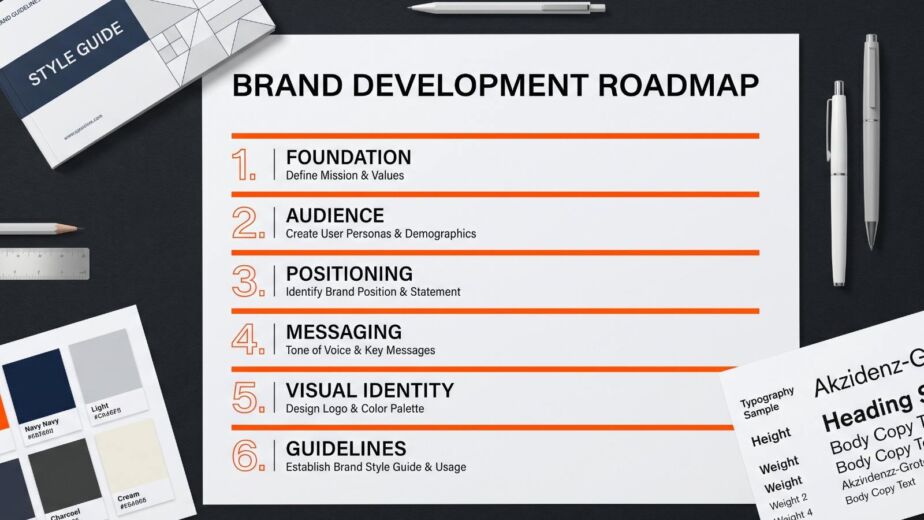
The right sequence for any business thinking about rebranding in this environment is always: resolve positioning first, define messaging second, design the identity third. That sequence is not slower. It is more efficient because every design decision has a clear brief and every execution choice has a defensible reason behind it.
Six Predictions for the Next Era of Branding
Positioning will replace advertising as the primary brand investment for growing businesses
As paid attention becomes more expensive and less trusted, the businesses that invest in occupying a clear position in their market, one that does not require constant spending to maintain, will compound their advantage over those that rely on reach and repetition to stay relevant.
Generic visual identities will become liabilities rather than neutrals
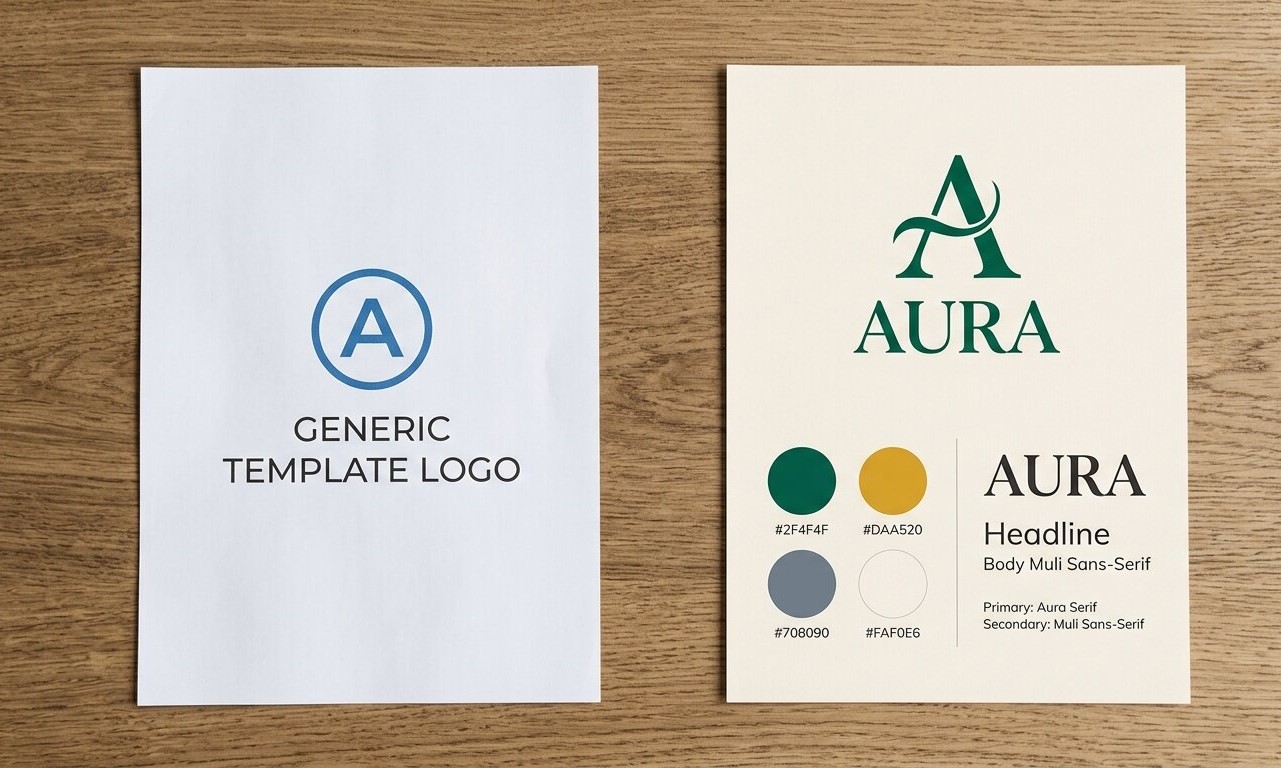
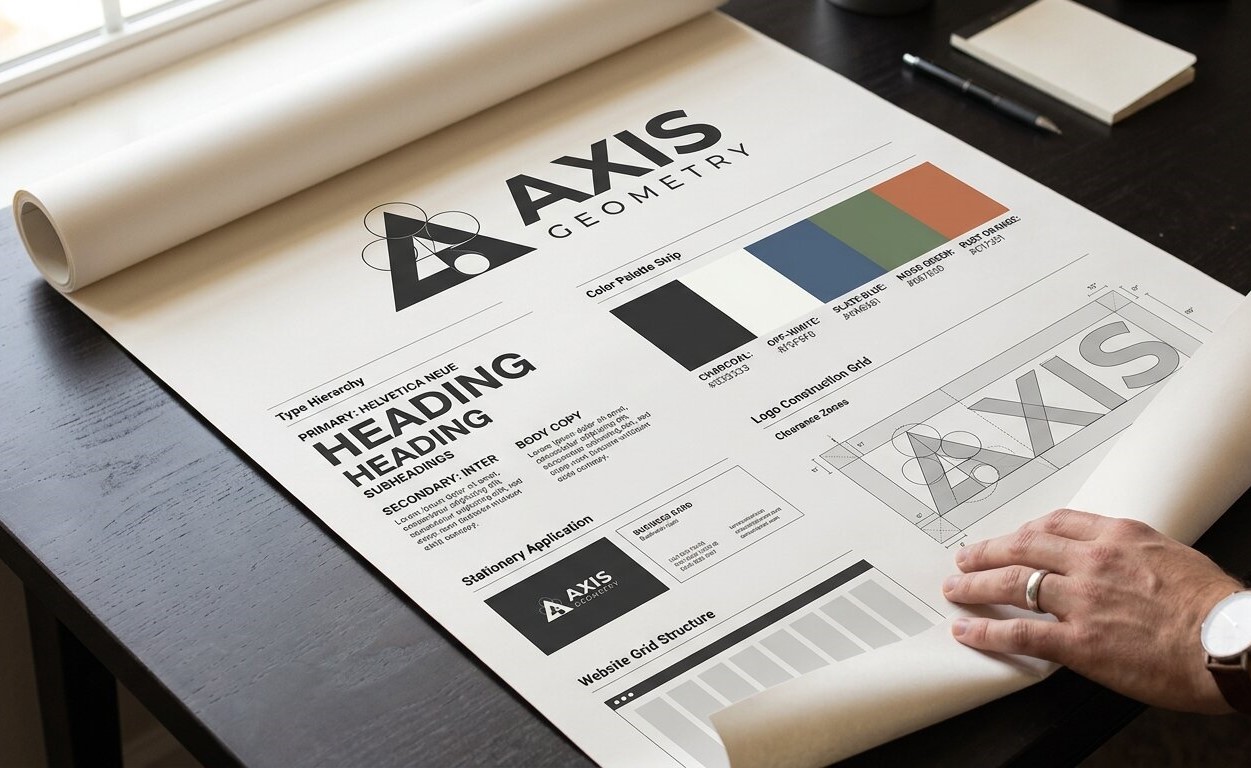
When AI tools make competent-looking design universally accessible, a generic identity no longer reads as professional. It reads as undifferentiated. The baseline for what counts as a credible brand identity will rise, and the gap between strategy-led identity systems and template-built aesthetics will become visible to audiences even if they cannot articulate why.
The most valuable brand asset will be a specific, defensible point of view
In a market flooded with content and claims, a brand that has a genuine perspective on its category, expressed consistently across every channel, will build authority faster than one that produces more content without a point of view. Opinion backed by expertise will outperform volume every time.
Brand consistency will become the primary driver of recognition, not reach
As discovery fragments across more surfaces, the brands that show up with the same identity, the same message, and the same quality of presence wherever they appear will compound recognition faster than those that optimise separately for each channel. Consistency is no longer a brand guideline concern. It is a growth strategy.
Businesses that invested in strategy-led branding early will be significantly harder to displace
A well-positioned brand with a coherent identity and a consistent presence builds a compounding advantage. Every piece of content reinforces the same position. Every client interaction deepens the same association. Every referral carries the same clear message. That kind of compound recognition cannot be bought or replicated quickly by a competitor arriving later.
The businesses that chase trends will fall further behind, not catch up
Each new platform, aesthetic direction, and communication channel demands adaptation at the surface level. The businesses without a stable strategic foundation will spend their resources rebuilding for each new surface. Those with clear positioning and a coherent identity will adapt the expression while the strategy remains constant. The gap between them will widen with each cycle.
What to Do Right Now
The businesses that will be well-positioned in five years are the ones making deliberate decisions today. Not about which trend to adopt or which platform to prioritise, but about the fundamental questions that no amount of execution can substitute for.
Who exactly is this business for? Not in demographic terms, but in terms of a specific person with a specific problem who has specific alternatives they are already considering. What makes this business genuinely different from every one of those alternatives? Not in aspirational terms, but in honest, provable, specific terms. What does the business want to be known for, and is every visible expression of the brand currently building that association or undermining it?
These questions belong in a brand strategy process. Not a logo refresh. Not a website redesign. Not a content calendar. A structured process for resolving the strategic questions that every design and communication decision depends on.
The businesses that answer those questions clearly, and then build a coherent identity and a consistent presence around the answers, will find the future of branding significantly less threatening than those that do not. Because the forces reshaping the market are not punishing brands that invest in strategy. They are punishing brands that have avoided it.
Frequently Asked Questions
The future of branding belongs to specificity over scale. As AI tools commoditise visual production, execution becomes cheap and widely available. The advantage shifts entirely to businesses that know exactly who they are for, what makes them different, and how to communicate that consistently. Strong positioning, honest differentiation, and a coherent identity built on strategy will separate growing businesses from forgettable ones across every industry.
AI is making the execution layer of branding faster and cheaper. Logos, copy, images, and websites can be produced at a fraction of the previous cost. But AI cannot determine positioning. It cannot identify genuine differentiation. It cannot build the strategic foundation that makes a brand mean something specific to a defined audience. This means the value of strategic brand work is increasing even as the cost of aesthetic production falls.
Three things will matter most. First, positioning clarity: knowing exactly who you serve and what makes you different in a way that no competitor can honestly replicate. Second, proof-based trust: audiences are growing more skeptical of claims and more attentive to evidence, so brands that show outcomes rather than assertions will build faster. Third, consistency: as discovery fragments across more channels and platforms, the brands that show up with the same identity and message everywhere will compound recognition while others are starting over every time.
More important than ever. When AI tools allow anyone to produce passable visual work quickly, the market will fill with generic aesthetics. Brands with a genuine, strategy-led identity built on a clear positioning will stand out more sharply against that backdrop, not less. The visual noise will actually make distinctive, coherent identity systems more valuable, not redundant.
Chasing trends instead of building foundations. The businesses that will thrive in the next decade are not the ones that adopted the newest channel or aesthetic first. They are the ones that built clear positioning, a coherent identity, and a consistent message and then applied those fundamentals across whatever new channels and tools emerged. Trends change the surface. Strategy outlasts all of them.
Build a Brand That Is Ready for What Comes Next.
Strategy-led branding for growing businesses that want to own a clear position and hold it.
Start the Conversation