Rebranding is important because businesses change but their brands often do not. When what a company looks like, sounds like, and says about itself no longer reflects what it actually is, the gap between perception and reality starts costing real money. Clients hesitate. Marketing underperforms. Good work gets attributed to the wrong kind of company. A rebrand closes that gap.
The businesses that treat rebranding as a purely cosmetic exercise, a new logo and a freshened color palette, tend to see limited results. The ones that treat it as a strategic reset, rebuilding the positioning, the messaging, and the identity from the ground up, consistently find that it changes how the business performs. Not just how it looks.
This post covers the real reasons rebranding matters, what it actually changes when done properly, and how to know whether your business is at a point where it is worth doing. If you want to understand the full process before reading further, our guide on how to rebrand a company covers the step-by-step detail.
What Rebranding Actually Changes
Before getting into the reasons rebranding is important, it is worth being precise about what a rebrand actually changes when it is done properly. This matters because the most common version of rebranding changes very little, and the most effective version changes quite a lot.
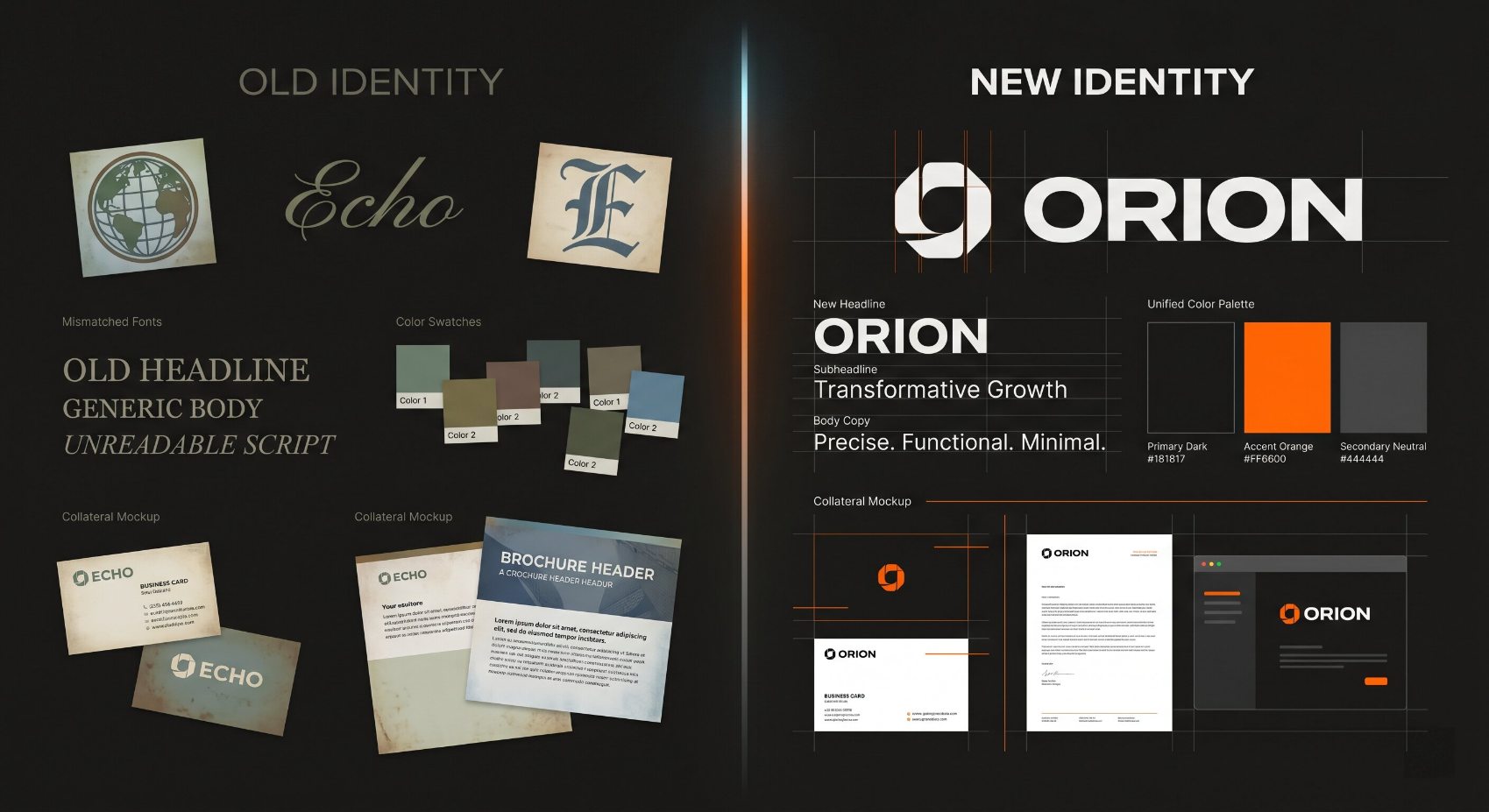
A surface-level rebrand changes the visual identity: logo, colors, typography, maybe a website redesign. It produces something that looks newer and often looks better. But if the positioning is the same, the messaging is the same, and the strategic foundation underneath has not been examined, the new visuals have nothing more specific to communicate than the old ones did. They are a better-looking version of the same problem.
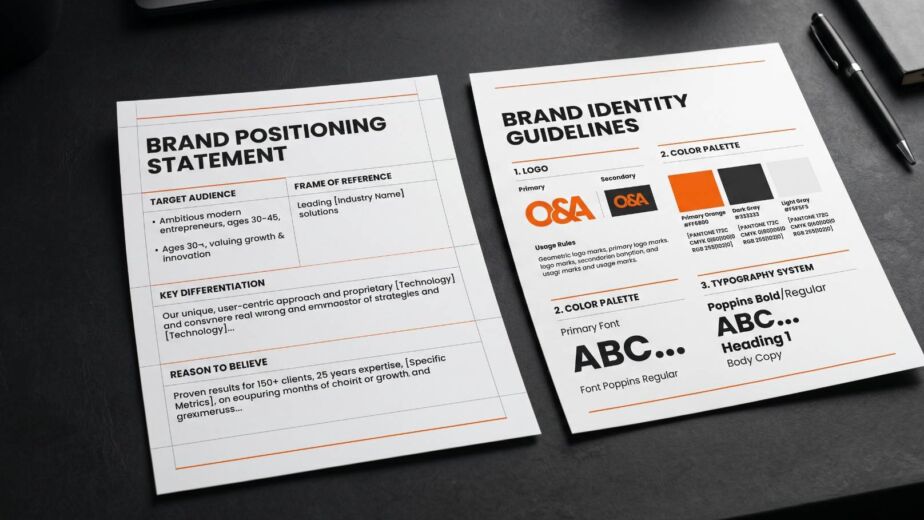
A strategic rebrand changes the foundation first. It revisits who the business is for, how it is positioned in the market, what it is genuinely differentiated by, and how it communicates that differentiation. The visual identity is then built to express that strategy. When a rebrand works this way, the results show up in business outcomes, not just in aesthetics. This is the standard our corporate rebranding services are built around.
A rebrand that only changes how your business looks is decoration. A rebrand that changes how your business is understood is a competitive advantage.
Eight Reasons Rebranding Is Important for Business Growth
Your brand no longer reflects what your business has become
This is the most common and most legitimate reason to rebrand. Businesses evolve. Services expand, target audiences shift, pricing moves upmarket, the team grows from two people to twenty. But the brand often gets left behind. The logo still looks like a startup. The messaging still sounds like the early pitch. The visual identity was designed for a company that no longer exists.
When a brand does not reflect the current reality of the business, it creates a credibility gap. Clients who find you through your content or referrals expect one kind of company and encounter a brand that signals something else. That disconnect damages trust before a single conversation has taken place.
You are winning work despite your brand, not because of it
Some businesses build strong client relationships and deliver excellent work while their brand actively works against them. Referrals come in, but cold outreach falls flat. Existing clients renew, but new prospects take longer to convert than they should. The brand is not helping to sell the business. It is simply not getting in the way of people who already know you.
When a brand is neutral at best and misleading at worst, every marketing effort has to work harder to overcome the weak first impression. A rebrand that accurately positions the business turns the brand into a selling asset rather than a liability to work around.
You cannot clearly explain what makes you different
If your team gives different answers when asked why a client should choose your business over a competitor, the positioning has not been done. This is a brand strategy problem before it is a marketing problem. Without clear differentiation, your brand occupies the same undifferentiated middle ground as every competitor in your category.
Rebranding, when it includes proper positioning work, forces a business to identify and commit to what actually makes it distinct. That answer then gets built into everything: the messaging, the visuals, the tone. The brand stops describing a generic category and starts describing a specific, ownable position in the market. Our brand positioning services focus specifically on this layer of the work.
Inconsistency across touchpoints is eroding trust
When your website looks different from your proposals, your social profiles use different colors from your printed materials, and your team describes the business differently depending on who is speaking, you have a consistency problem. Inconsistency reads as disorganization, and disorganization undermines trust before anyone has experienced your actual work.
A rebrand that produces clear brand guidelines solves this at the system level rather than chasing individual inconsistencies one at a time. Every touchpoint gets brought into alignment, and the guidelines ensure that new materials, new team members, and new channels maintain that alignment going forward.
A structural change requires a unified identity
Mergers, acquisitions, and significant pivots in business model or target market all create situations where the existing brand no longer covers the full reality of the organization. Two companies combining under one name need a brand that represents both without alienating either client base. A business that has moved significantly upmarket needs a brand that reflects a premium positioning its original identity was not built for.
These structural changes are among the clearest cases where rebranding is not optional. Operating with a brand that does not match the current organizational structure creates confusion internally as well as externally, slowing integration and making it harder to present a coherent identity to the market.
Marketing spend is not compounding into recognition
When a brand is inconsistent or unclear, each marketing campaign essentially starts from near-zero recognition rather than building on what came before. An ad gets seen, a post gets engagement, a campaign runs, and then the accumulated effect dissipates because there is no coherent brand underneath it for audiences to associate the activity with.
A clear, consistent brand acts as a multiplier for every marketing effort. Each impression adds to the same picture. Over time, that accumulated recognition reduces the cost and effort required to convert new clients because the brand is doing some of the selling before any specific campaign runs. This is the compounding effect that a well-built brand strategy produces.
You are entering a new market or audience
A brand built for one market does not automatically translate to another. If your business is expanding geographically, moving into a new industry vertical, or deliberately targeting a different buyer profile, the brand needs to be evaluated against the new context. What positioned you clearly in your original market may communicate the wrong things to a new audience entirely.
Rebranding for market expansion is not about abandoning what worked. It is about ensuring the brand speaks to the new audience as clearly as it spoke to the original one, which sometimes requires significant repositioning and sometimes requires only targeted messaging adjustments alongside visual consistency updates.
Talent and partnerships are judged by your brand too
The commercial impact of a weak brand does not stop at clients. The people you want to hire, the agencies you want to partner with, and the investors or collaborators you want to attract all form an opinion about your business based on how it presents itself. A brand that looks under-resourced, inconsistent, or misaligned with the level of work you actually deliver sends the wrong signal to everyone, not just customers.
Strong hires choose employers partly based on brand perception. High-quality partners and collaborators make the same calculation. A rebrand that accurately reflects your business at its current level opens doors that an outdated or underdeveloped brand quietly closes, often without you ever knowing it happened.
What Happens When Businesses Do Not Rebrand When They Should

The longer a brand gap is left unaddressed, the more expensive it becomes to close.
The cost of not rebranding is less visible than the cost of rebranding, which is why it tends to be underestimated. You do not get an invoice for the clients who chose a competitor because your brand did not reflect your actual quality. You do not see a line item for the marketing budget that failed to compound because there was no coherent brand underneath the campaigns.
What you do see is: conversion rates that plateau, marketing results that feel inconsistent, difficulty articulating your differentiation in sales conversations, and a recurring sense that the business is better than how it is being perceived. These are symptoms of a brand gap, and they compound over time rather than resolving themselves.
Businesses that delay rebranding when the signals are clear consistently spend more in the long run: on marketing that underperforms, on sales cycles that drag, and on the eventual rebranding work itself, which becomes more complex when years of inconsistent output need to be resolved at once.
Real Examples of Why Rebranding Matters
The business case for rebranding is not theoretical. Some of the clearest examples come from companies where the gap between brand perception and business reality became a commercial problem, and where a strategic rebrand changed that.
Poppi: From niche health product to mainstream disruption
Poppi was originally marketed as a “prebiotic apple cider vinegar beverage,” language that accurately described the product but severely limited its audience. A strategic rebrand repositioned it as a “better-for-you soda,” same product, different positioning. By 2025 the brand had reached $500 million in annual retail sales and was acquired by PepsiCo for $2.2 billion. The product never changed. The brand did.
Dunkin: Dropping Donuts to own the beverage space
Dunkin dropped “Donuts” from its name in 2018 to reposition as a beverage-led, on-the-go brand. The name change was minimal but the strategic intent was clear: signal that the brand was no longer just about donuts, creating room to compete directly with coffee-focused chains. The rebrand was paired with cultural partnership work that compounded the repositioning over the following years. Revenue grew consistently through the transition.
In both cases, the rebrand was important not because the old brand was ugly but because it was limiting. It was communicating something that had become either inaccurate or strategically narrow. The rebrand removed that limitation.
When Rebranding Is Not the Answer
Rebranding is important when the right conditions apply, but it is not a solution to every business problem. Rebranding will not fix a product that does not meet market needs, a sales process that is broken, or a service quality issue. A stronger brand can communicate your value more clearly, but it cannot create value that does not exist.
It is also worth being clear that rebranding purely for novelty or because the existing brand looks dated compared to a competitor is a weak reason. Visual freshness alone does not produce the business outcomes that make rebranding worthwhile. The decision should be driven by a genuine strategic gap between how the business is perceived and what it actually delivers, not by aesthetic comparison.
If you are unsure whether your business needs a rebrand or a different kind of investment, the questions in our guide on when and how to rebrand a company help diagnose the right answer.
How to Get Rebranding Right
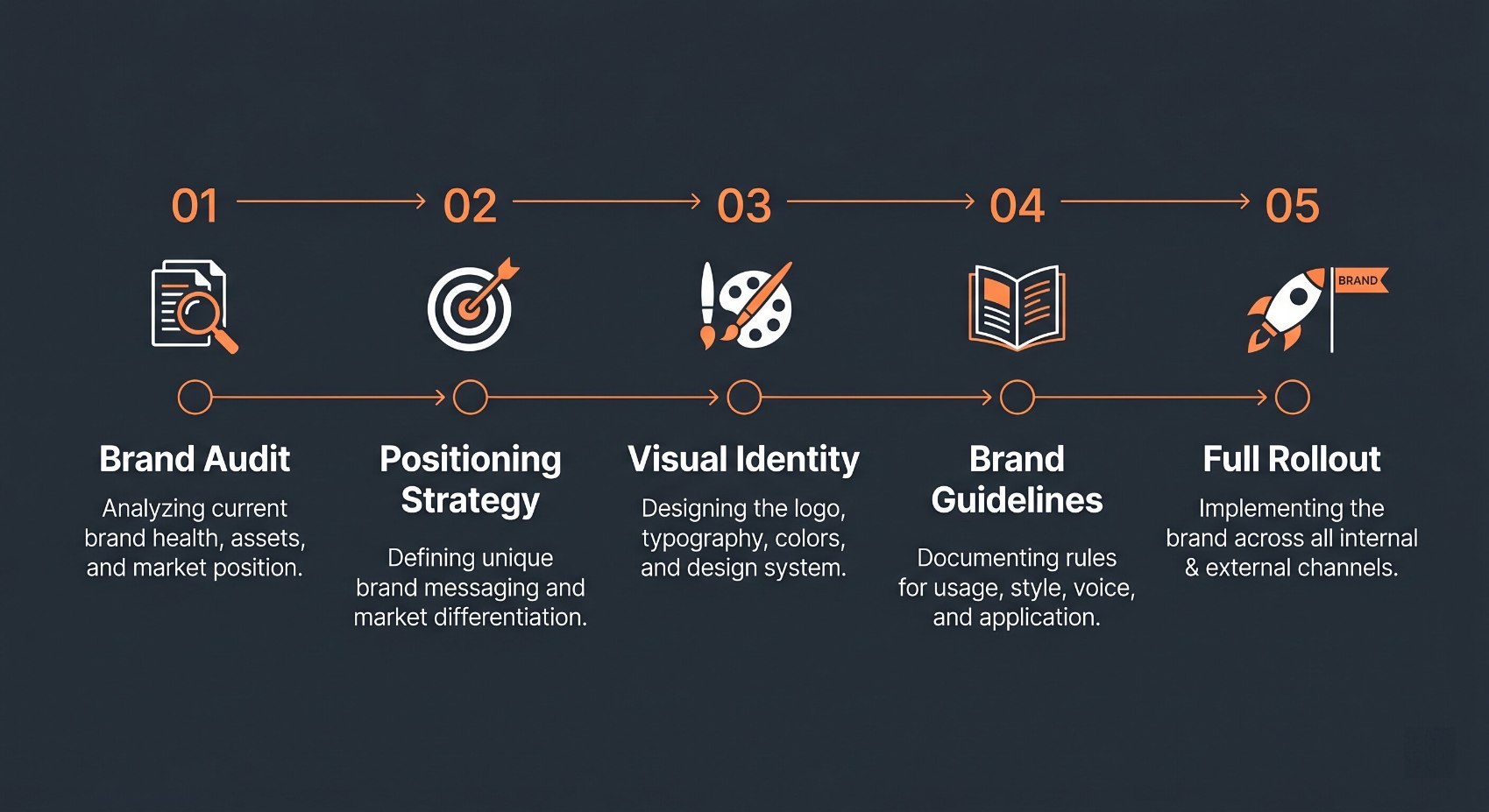
Understanding why rebranding is important is the first step. Executing it effectively is the second. The businesses that see the strongest returns from rebranding share a consistent approach:
- Strategy before visuals. The positioning, audience definition, and messaging work happens before a single design decision is made. Visuals that are not rooted in strategy are decoration regardless of how polished they are.
- Audit before designing. Understanding what the current brand has built in terms of recognition and trust informs what should be preserved through the transition and what should change. Throwing away equity that took years to build is an avoidable mistake.
- Guidelines before launch. A rebrand without documented guidelines starts drifting immediately. Consistency requires a system, not good intentions.
- Communication before surprise. Existing clients should understand the rebrand before it goes public. The narrative should focus on continuity and direction, not just aesthetics.
- Full rollout, not partial. Running two versions of a brand simultaneously undermines the rebrand. Update all touchpoints as close to simultaneously as possible.
Frequently Asked Questions
The clearest signals are: your brand does not reflect what the business currently does or who it serves, your team describes the business inconsistently, your visuals look different across platforms, you struggle to explain your differentiation clearly, your marketing is spending well but not compounding into lasting recognition, or the business has gone through a significant structural or strategic change since the brand was last built.
Any one of these is worth taking seriously. Several together usually indicate the brand foundation needs rebuilding before more marketing investment makes sense.
Your business has grown. Your brand should show it.
We build rebrands that start with strategy, protect what you have built, and produce an identity your business can grow into for the next decade.