Brand strategy is one of the most valuable things a business can invest in, and one of the most easily forgotten. It gets built inside research documents, workshop outputs, and strategy decks. The thinking is there. But thinking locked inside a document does not help a designer make decisions, a copywriter find the right words, or a client understand why a creative direction actually works. Brand positioning quote cards solve this problem.
They take the strategic core of a brand and compress it into a single, clear, memorable line. Not a tagline. Not a slogan. A strategic statement that makes the brand’s positioning visible and usable in everyday work.
This guide covers what positioning quote cards are, why they matter, and exactly how to build ones that do real strategic work inside a brand system.
The Core Idea in One Sentence
A positioning quote card turns strategy into language that people can actually remember and use.
It is not decoration. It is not inspiration for the sake of it. It is a compact expression of what a brand stands for, who it exists for, what makes it different, and how it wants to be remembered.
When done well, a single quote card communicates more about a brand’s strategic intent than three pages of brand guidelines ever could.
What Is a Brand Positioning Quote Card?
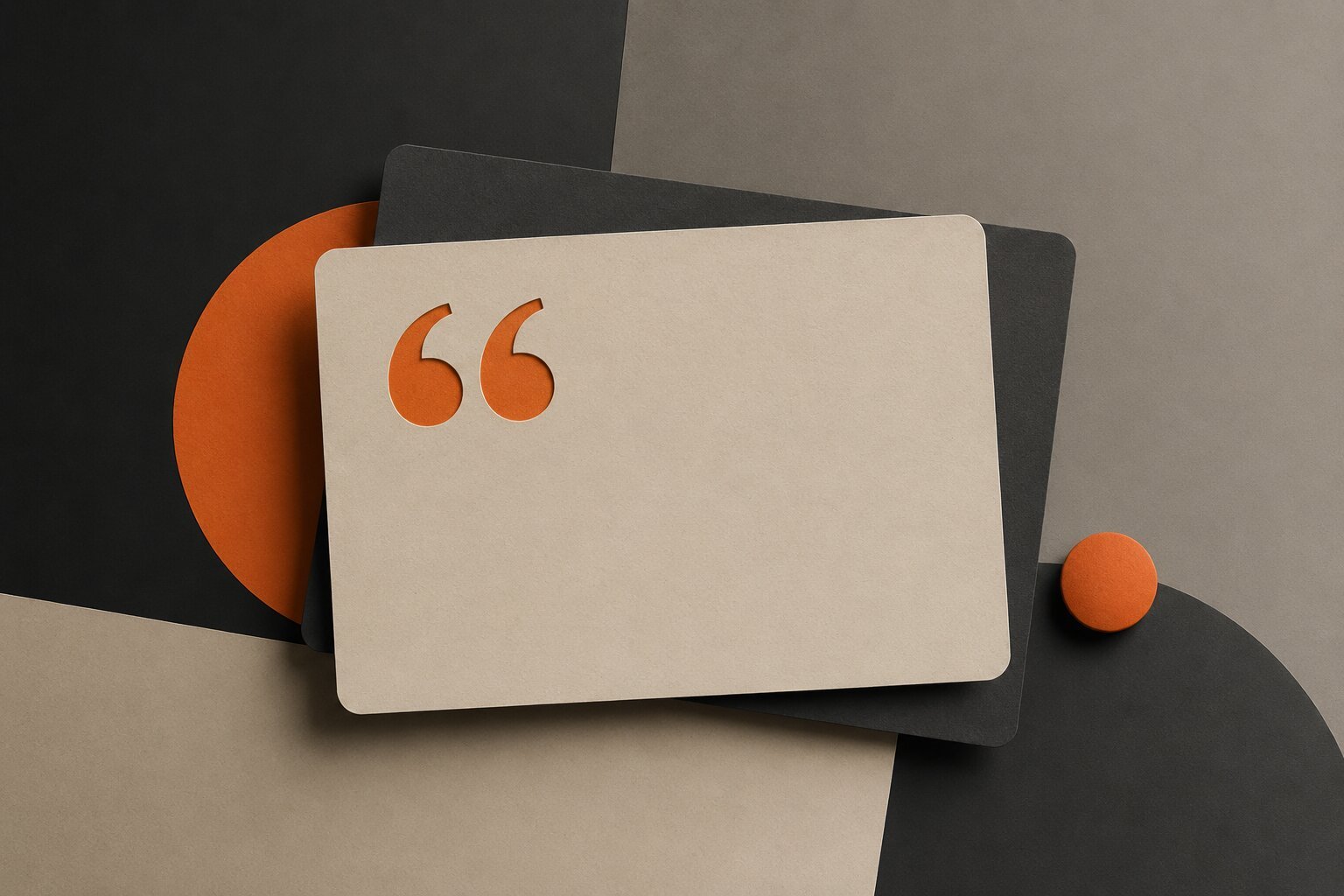
A brand positioning quote card is a short, focused statement that makes strategic thinking visible. It is designed to be clear enough to understand immediately and specific enough to be genuinely useful.
The most important thing to understand is what it is not. It is not a tagline created for an advertising campaign. It is not a mission statement written for a pitch deck. It is not a motivational quote pulled from a design mood board. Those serve different purposes, and confusing them with positioning quote cards is one of the reasons most brand presentations fail to communicate strategy clearly.
A positioning quote card is a strategic artifact. It belongs inside the brand system alongside the visual identity, not as decoration, but as the layer of thinking that explains why the visual decisions exist.
For example, a good positioning quote card might say:
“Premium is not louder. It is clearer.”
That single line communicates a positioning stance, a design philosophy, and a competitive difference. It tells a designer exactly what to do and what to avoid. It tells a client why certain creative decisions were made. It gives the whole brand system a point of view.
What Brand Positioning Quote Cards Cover
- The brand’s core beliefs and philosophy
- The audience’s mindset and what they value
- The competitive difference that sets the brand apart
- The lasting impression the brand wants to create
- The strategic rationale behind visual and verbal decisions
Why Quote Cards Matter More Than Most Brands Realize
Most brand presentations are heavy on visuals and light on explanation. Logos, color palettes, typography systems, and mockups fill slide after slide. What they rarely include is the strategic thinking that connects those visual choices to an actual market position.
The result is a brand identity that looks polished but cannot explain itself. A client sees the work and feels something, but cannot articulate why it works or whether it is right. A team member joins six months later and has no way of understanding what the brand actually stands for. A new campaign brief gets written without a clear reference point, and the creative drifts from what was originally intended.
Positioning quote cards fix this. They give the visual identity a point of view. They translate abstract strategy into language that travels. When a designer introduces a visual system alongside clear strategic statements, the audience gains context for evaluating the work. The conversation shifts from “do I like this?” to “does this communicate what we intend?” That is a far more productive question.
For example, a minimalist identity paired with the quote “Clarity before complexity” immediately explains why the design avoids unnecessary elements. The visual choice and the strategic intention become one coherent thing rather than two separate layers.
The Problem with Generic Brand Language
Most brands default to describing themselves with broad adjectives. Modern. Premium. Innovative. Trustworthy. These words are not wrong, but they are not useful either. They describe an outcome without explaining how the brand creates it. They could belong to any business in any market.
A positioning quote card takes those abstract attributes and makes them specific and directional.
“We are trustworthy.”
“Trust is built when every detail feels considered.”
The second version communicates the same attribute, but it also explains the mechanism. It tells you what trustworthiness looks like in practice for this specific brand. It gives designers, writers, and strategists something they can actually work from. That specificity is what separates a positioning quote card from generic brand language.
Quote Cards vs Other Brand Language: A Direct Comparison
| Positioning Quote Card | Tagline | Mission Statement | |
|---|---|---|---|
| Purpose | Make strategy visible and usable | Create memorability in advertising | Declare organizational intent |
| Audience | Internal teams, clients, designers | External customers and prospects | Stakeholders, investors, recruits |
| Tone | Strategic and directional | Catchy and emotive | Formal and aspirational |
| Changes when | Brand repositions | Campaign ends | Company fundamentally pivots |
| Measured by | Strategic clarity and usability | Recall and brand association | Alignment and cultural fit |
The Four Questions a Quote Card Should Answer
The most effective positioning quote cards are built around one of four fundamental questions. Each question unlocks a different layer of the brand’s strategic position. A complete brand system usually contains quote cards that address all four.
Who Is This Brand For?
A quote card that answers this question clarifies the audience’s mindset rather than their demographics. It captures the attitudes, values, and ambitions of the people the brand is built for. It helps the right people immediately recognize that this brand understands them, and it helps the wrong people self-select out.
What Does This Brand Believe?
A quote card that answers this question communicates the philosophy behind the brand. It expresses the principles that guide decisions, shape experiences, and determine how the brand behaves. This is where brand character lives. It takes a stance. It creates a standard that every piece of work can be measured against.
What Makes This Brand Different?
A quote card that answers this question highlights a competitive advantage or unique perspective. It summarizes the specific thing that sets this brand apart from its alternatives and gives people a clear reason to choose it. It does not just say the brand is better. It says what kind of better and why that matters.
How Should This Brand Be Remembered?
A quote card that answers this question shapes the lasting impression the brand wants to create. It defines the single idea the brand hopes audiences will associate with it long after the first interaction. It gives the whole team a north star for every decision.
What Happens When You Skip This Layer
The most common mistake in brand system development is building the visual identity without building the strategic language alongside it. The visuals get created, the guidelines get written, and the brand is handed over without any tools for applying it consistently.
The symptoms show up quickly. Teams describe the brand differently in different contexts. New designers join and produce work that drifts from the original intent. Clients struggle to brief agencies because they cannot articulate what the brand stands for. Campaigns feel disconnected from each other because there is no fixed strategic reference point tying them together.
Signs you need quote cards
- Teams describe the brand differently to different people
- New campaigns require messaging built from scratch each time
- Clients struggle to explain why they chose you over a competitor
- Creative work drifts from one project to the next
- Visual guidelines exist but the strategic rationale does not
- The brand feels inconsistent even though the logo has not changed
What quote cards make possible
- A shared language that travels across teams and projects
- Creative briefs that start from a defined strategic position
- Client conversations focused on intent, not personal preference
- New team members who can orient quickly without long onboarding
- Campaigns that build on each other rather than starting from zero
- A brand that feels intentional before the audience sees the logo
How to Build a Quote Card That Actually Works
The strongest quote cards are often the simplest. They avoid corporate jargon, complicated language, and unnecessary cleverness. Their goal is to communicate one idea clearly, not to impress people with sophistication.
Avoid adjectives where possible
Adjectives describe. Verbs and specific nouns do. “We are innovative” is an adjective. “We build tools that replace meetings” is a statement. One gives designers something to work with. The other does not.
Write for the person using the brand, not the person approving it
A quote card that sounds impressive in a presentation but gives a designer no direction has failed its purpose. The test is usability, not applause.
Test it against a real decision
Show the quote card to someone working on a piece of brand communication and ask whether it helps them make a specific choice. If it does not, it is not specific enough.
One idea per card
If a quote card is trying to say two things, it is saying neither clearly. Split it or choose the stronger one. Compression is a feature, not a limitation.
Frequently Asked Questions
There is no fixed number, but most brand systems benefit from four to six. One for each of the four fundamental questions is a strong foundation. Additional cards can be built for specific audience segments, product lines, or brand expressions as the system matures.
The priority is quality over quantity. Four sharp, specific cards are far more useful than twelve vague ones.
Strong brands are not just seen. They are understood. Positioning quote cards are how understanding gets built.
Ready to turn your brand strategy into language that actually travels?
We help growing businesses surface their positioning and express it in ways teams can use, clients can understand, and audiences can remember.