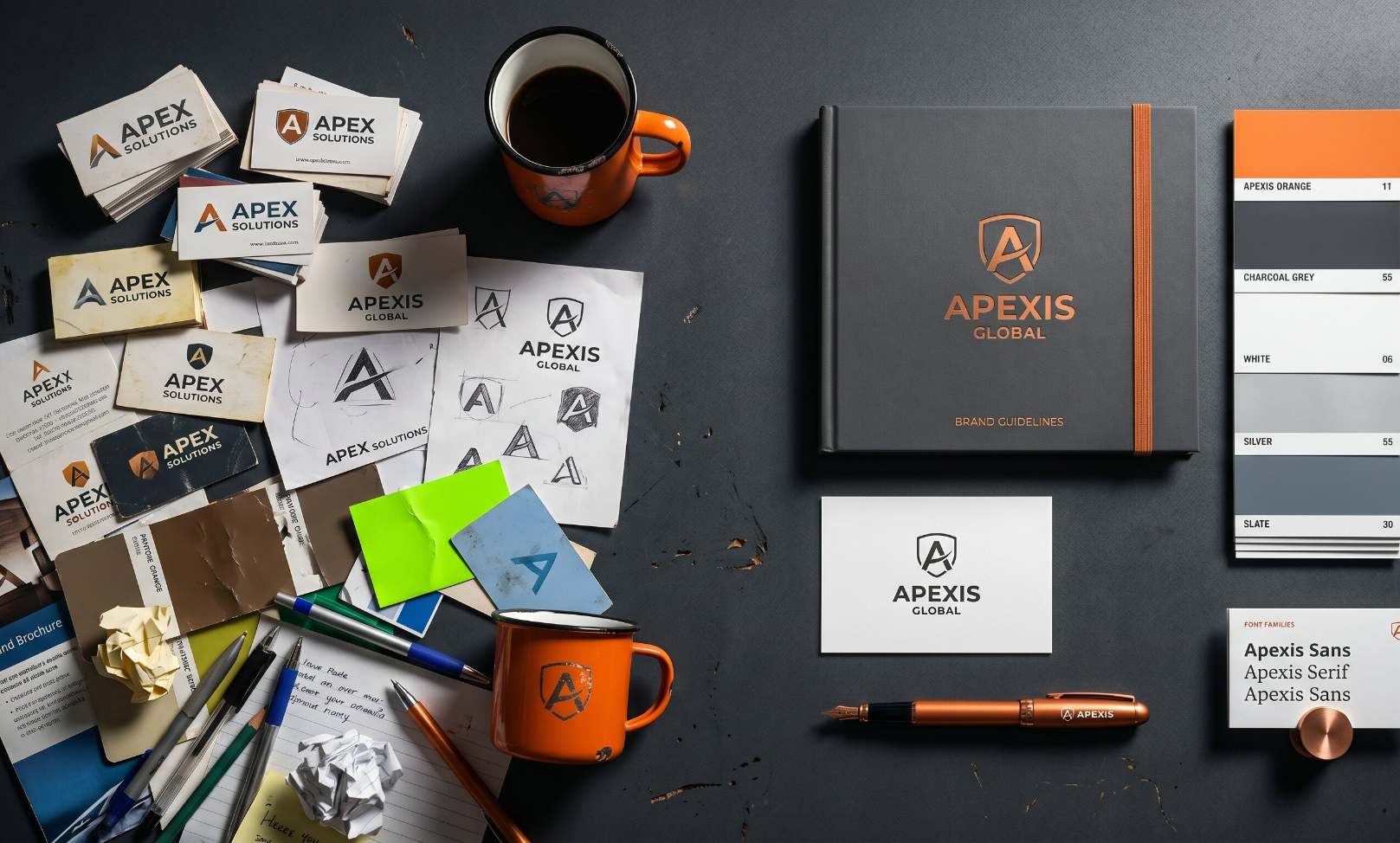
Rebranding a company without losing what you built is not about starting over. It is about knowing precisely what to keep, what to update, and what to let go. Done right, a rebrand protects the equity your business has already earned while removing whatever is getting in the way of where you are going next.
The most common rebranding mistake is treating it as a design project. A company updates its logo, refreshes its color palette, and launches a new website, then wonders why nothing feels different six months later. The problem is that the work happened at the surface level. The positioning, the messaging, and the strategic foundation underneath it all stayed the same.
A rebrand that actually works starts with strategy, not visuals. Whether you are going through a full overhaul or a focused refresh, the process is the same: understand what your business has become, define where it needs to go, and build a brand identity that bridges the two. Our rebranding services are built entirely around this sequence.
What Does Rebranding a Company Actually Mean?
Rebranding means changing how your company is perceived, not just how it looks. It can involve updating your visual identity, your name, your positioning, your messaging, or all of the above. The scope depends entirely on the gap between where your brand currently sits and where it needs to be.
There are two distinct types:
Partial Rebrand
- Visual refresh: updated logo, colors, typography
- Messaging refinement without repositioning
- New brand guidelines built on an existing foundation
- Best for: brands with strong equity that need modernizing
- Risk level: lower. Recognition is largely preserved
Full Rebrand
- New positioning, new name, new visual identity
- Complete messaging and voice overhaul
- New brand architecture if the business structure changed
- Best for: businesses that have fundamentally changed
- Risk level: higher. Requires careful equity transfer
Most growing businesses need something between the two: a strategic refresh that modernizes the identity and tightens the positioning without erasing the trust they have spent years building. Knowing which type you need is the first decision to get right before any design work begins.
How to Rebrand a Company: The Full Process
The steps below apply whether you are refreshing or rebuilding. What changes between a partial and full rebrand is the depth of work at each stage, not the sequence.
-
01
Audit Your Current Brand
Before you decide what to change, you need to understand what you currently have. A brand audit looks at your existing visual identity, your messaging, your market positioning, and how all of it lands with your actual audience.
The audit should answer three questions. What is working and building real recognition? What is actively getting in the way? And what simply no longer reflects who the business has become? The answers determine your scope. Skipping this step is how businesses end up rebranding without purpose, changing things that did not need changing and keeping things that did.
Look specifically at: how your brand appears across every touchpoint (website, proposals, social, packaging, signage), how your team describes the business to new contacts, and how your existing clients would describe you to a peer.
-
02
Identify What Has Brand Equity Worth Keeping
This is the step most rebrand guides skip entirely, and it is the one that determines whether your rebrand loses you customers or gains you new ones.
Brand equity is the accumulated recognition, trust, and association your business has built over time. Some of it lives in your visual identity. Some of it lives in your name. Some of it lives in specific phrases your clients use to describe you. All of it has real commercial value.
Before anything changes, map what your audience actually recognizes and associates positively with your business. These elements should be protected through the rebrand, either kept directly or evolved carefully enough that existing clients carry recognition across the transition without confusion.
-
03
Define Your New Strategic Foundation
This is the core of the work. Before any visual decisions are made, you need a clear, written strategic foundation that defines your positioning, your target audience, your brand voice, your value proposition, and your key messages.
Your brand positioning is the single most important output at this stage. It defines where your brand sits in the market relative to alternatives, and it becomes the brief that every design decision is written from. If your positioning is vague, your identity will be vague. If it is clear and specific, your visual identity will have something real to express.
This stage should also include competitive analysis. Understanding how your direct competitors present themselves tells you which space is genuinely available for your brand to own, and which visual and verbal territory to avoid.
-
04
Build the New Visual Identity
With a clear strategic foundation in place, you can build a visual identity that actually expresses something meaningful. This includes your logo system, color palette, typography, and the broader visual language that governs how your brand looks across every application.
The goal at this stage is not to create something that looks current. It is to create something that is recognizably, distinctly yours. Strong brand identity design is built on clarity and functional consistency, not trend-following.
Every visual decision should be traceable back to the strategic foundation. Why this color? Because it communicates this quality to this audience. Why this typeface? Because it carries this level of authority in this market. Design that cannot answer these questions is decoration, not identity.
-
05
Write the Brand Guidelines
A brand identity without guidelines is a brand that will drift. The moment your logo gets handed to a third-party developer, a new marketing hire, or an external print supplier, inconsistencies start accumulating. Over time those inconsistencies erode the recognition your rebrand was designed to build.
Brand guidelines should cover logo usage and exclusion zones, color specifications for digital and print, typography hierarchy and usage rules, photography and imagery style, tone of voice with written examples, and how the brand should and should not be applied across key touchpoints.
The best guidelines are built to be used by people who were not in the room when the brand was created. They should be specific enough to prevent mistakes and clear enough that anyone on the team can apply them confidently.
-
06
Update All Brand Touchpoints
A rebrand is only complete when the new identity is live everywhere your brand shows up. This means your website, your social media profiles, your email signatures, your proposal templates, your signage, your packaging, your pitch decks, and any other material a client or prospect might encounter.
Prioritize by what gets seen most. Your website and primary digital presence should update first. Physical materials like signage and print collateral can follow in the weeks after launch, as long as there is a clear timeline for completing the transition.
Running two versions of your brand simultaneously for any extended period actively undermines the rebrand. Inconsistency at this stage sends exactly the kind of scattered signal the rebrand was designed to fix.
-
07
Launch and Communicate the Change
How you announce a rebrand matters almost as much as the rebrand itself. Your existing clients need to understand that the business they trust is still the same business, now better expressed. New prospects need to encounter the new brand with enough context to understand what it stands for.
A strong rebrand launch communicates the reason behind the change. Not just “we have a new look” but “we have grown into something more specific, and our brand now reflects that.” This framing turns a visual update into a statement of direction, which is far more compelling for both existing and prospective clients.
For most businesses, the launch includes a direct communication to existing clients, updated digital presence going live simultaneously, and a short narrative explaining the rebrand on the website or blog. See how we handled this across our own case studies to understand how a rebrand lands in practice.
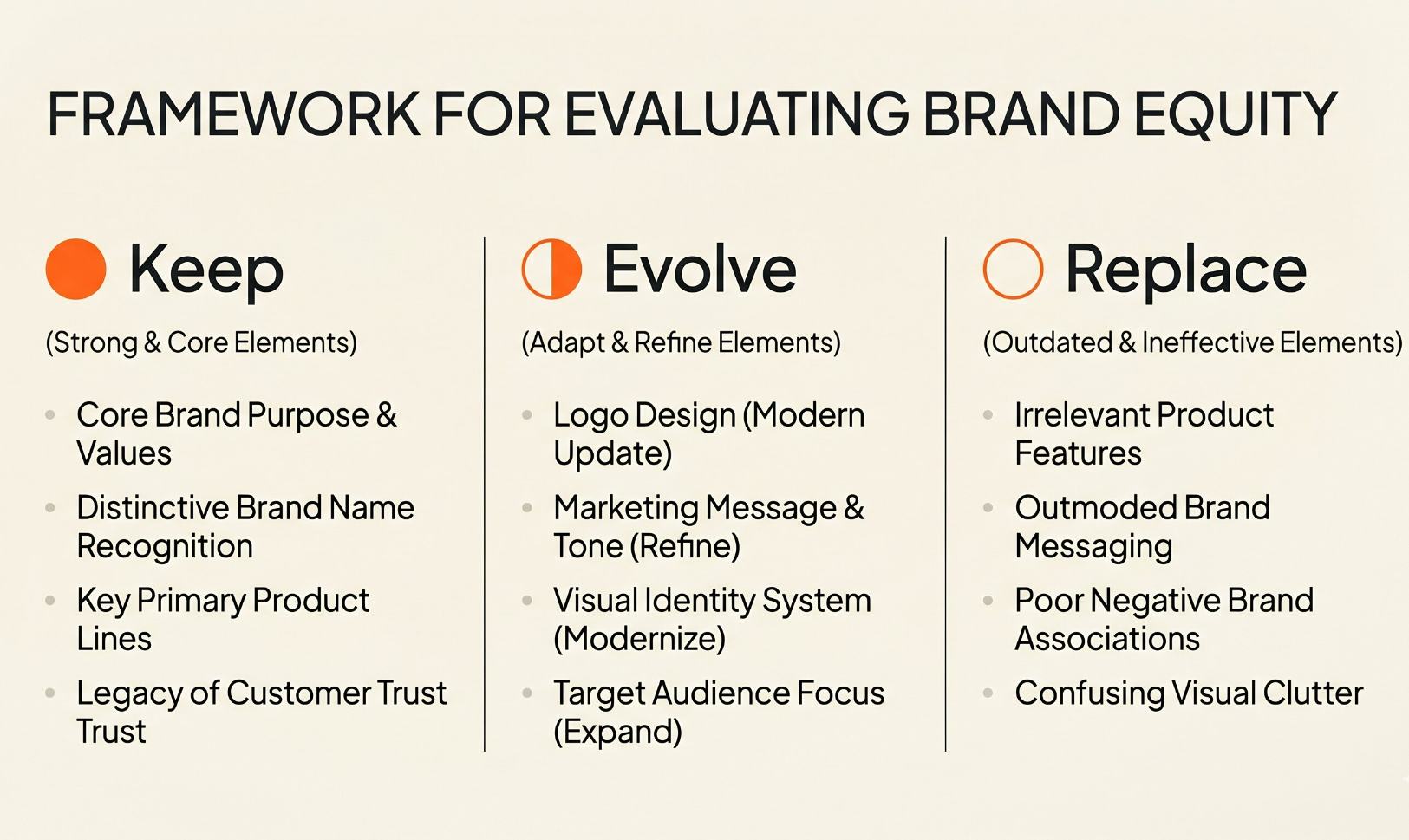
Knowing what to protect is as important as knowing what to change.
How Long Does It Take to Rebrand a Company?
Timeline depends on scope. A focused brand refresh with a clear strategic brief typically takes 4 to 6 weeks. A comprehensive rebrand covering strategy, identity, guidelines, and full touchpoint rollout takes 8 to 12 weeks for most businesses.
| Phase | What Happens | Typical Duration |
|---|---|---|
| Brand Audit | Current brand assessment, equity mapping, competitive analysis | 1 to 2 weeks |
| Strategy | Positioning, audience definition, messaging framework, voice | 1 to 2 weeks |
| Identity Design | Logo system, color, typography, visual language | 3 to 5 weeks |
| Brand Guidelines | Usage rules, templates, tone of voice documentation | 1 to 2 weeks |
| Touchpoint Rollout | Website, social, materials, internal documents updated | 1 to 3 weeks |
| Launch | Announcement, client communication, public reveal | 1 week |
Rushing the strategy phase to get to design faster is the single most common cause of a rebrand that needs to be redone within two years. The time invested in getting positioning and messaging right before any visual work begins is what determines whether the identity that comes out of the process actually holds up.
What to Protect Through a Rebrand
The “without losing what you built” part of rebranding comes down to a specific discipline: treating brand equity as an asset to be managed, not a constraint to be escaped.
The businesses that lose customers during a rebrand are almost always the ones that changed too much too fast, without communicating the continuity between who they were and who they are becoming. Equity transfer is a skill, not an accident.
Specifically, protect the following through any rebrand:
- Your name, unless there is a genuinely compelling strategic reason to change it. Name changes carry enormous risk and should only happen when the existing name is actively limiting growth or creating the wrong associations.
- Your core values and the reason clients chose you. These should anchor the new brand, not disappear from it. The rebrand should express them more clearly, not replace them.
- Any visual element that has become genuinely distinctive. If clients consistently recognize a specific color, shape, or visual device as unmistakably yours, evolve it rather than replacing it entirely.
- Your existing client relationships. Communicate the rebrand to current clients before it goes public. They should feel informed and reassured, not surprised.
- Your SEO equity, if your website is rebranding. Proper redirects, updated metadata, and consistent brand signals to search engines protect years of ranking value through the transition.
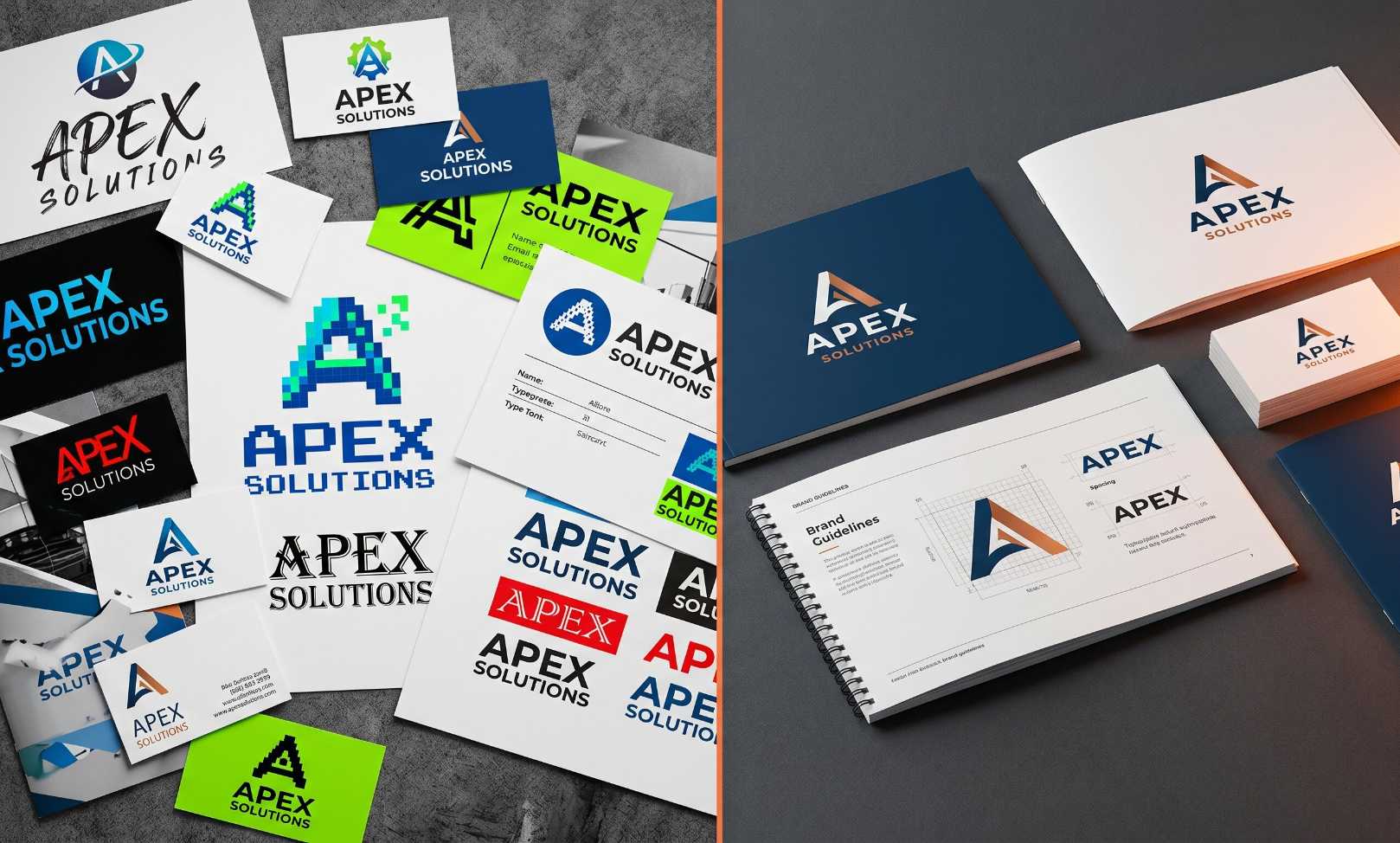
The Most Common Rebranding Mistakes
Rebranding Without a Strategic Brief
Starting with design before strategy is the most frequent mistake. Without a clear positioning statement and defined audience, every design decision becomes subjective, and the identity that results has no fixed meaning. It looks like something, but it does not communicate anything specific.
Hiring a designer before you have answered: who is this brand for, what does it stand for, and how is it different? The designer needs those answers to produce work that functions as more than decoration.
Changing Everything at Once
A total overhaul of name, visual identity, messaging, and positioning simultaneously is high-risk for any business with an existing client base. Each change introduces some degree of confusion. Stack them all together and the cumulative disorientation can erode the trust your brand has spent years building. Change should be purposeful and scoped to what actually needs changing, not comprehensive for its own sake.
No Brand Guidelines After the Rebrand
Delivering a new logo without guidelines is delivering half a rebrand. Without documented rules for how the brand should and should not be used, inconsistencies accumulate immediately. Within months, different versions of the logo are in circulation, colors are being applied incorrectly, and the unified identity the rebrand was supposed to create has already started fragmenting.
Treating the Rebrand as a One-Day Event
A rebrand is not a launch event. It is a transition that needs to be managed across every touchpoint, every team member, and every external partner your business works with. Allocating time and budget only for the design phase, then treating rollout and communication as an afterthought, is how rebrands fail to stick even when the creative work is strong.
Should You Rebrand Yourself or Hire a Specialist?
This depends on the complexity of your business and the depth of the rebrand required. Some businesses can manage a visual refresh internally if they have strong in-house design capability and a clear strategic direction. Most cannot.
The case for bringing in a specialist is not just about design quality. It is about outside perspective. Your internal team is too close to the business to audit the brand objectively, identify positioning gaps accurately, or evaluate the identity without the bias of familiarity. An external specialist brings the strategic distance that makes honest brand assessment possible.
A specialist also brings a process. Done properly, corporate rebranding is structured work: audit, strategy, identity, guidelines, rollout. Each phase informs the next. Managing that sequence without experience is where most DIY rebrands break down, not in the design phase but in the strategic work that should precede it.
For businesses considering the investment, our breakdown of brand strategy services explains exactly what that foundational work involves and what it produces.
Frequently Asked Questions
The clearest signs are: your brand no longer reflects what the business actually does or who it serves, you are winning work despite your brand rather than because of it, new prospects consistently misunderstand your positioning, your visuals look inconsistent across different platforms, or the business has gone through a significant structural change such as a merger, acquisition, or major pivot.
A general feeling that the brand feels “off” is worth taking seriously. That feeling usually means a gap has opened between what the business has become and what the brand currently communicates.
Ready to rebrand your company the right way?
Strategy first. Identity second. A rebrand that holds up because it was built on something real, not just made to look new.